
Trek In Ethiopia’s Simien Mountains – The Roof Of Africa
Our trekking holiday to the Simien mountains allows you to explore many summits (above 4000mt or 13123 feet), lowlands, valleys, and flatlands in addition to watch three of the most endemic mammals in Ethiopia. The Walia ibex, the Gelada baboon, and the Simien wolf. Approximately 50 different bird species have been identified, among them a great many scavengers and birds of prey.
The Simien Mountains National Park is located, where the Amhara Regiona1 State 885 Km North West of Addis Ababa, geographical coordination approximately in 13° 11N’, 38° 00E with the total area 190 K㎡. The park was established 1966 & legally gazetted 1969. The Simien highlands constitute one of the major mountain massifs in Africa. The region includes many summits above 4,000 meters and culminates in the highest point in Ethiopia, Ras Dashen, at 4,543 meters (14,904 feet), the fourth highest mountain in Africa.
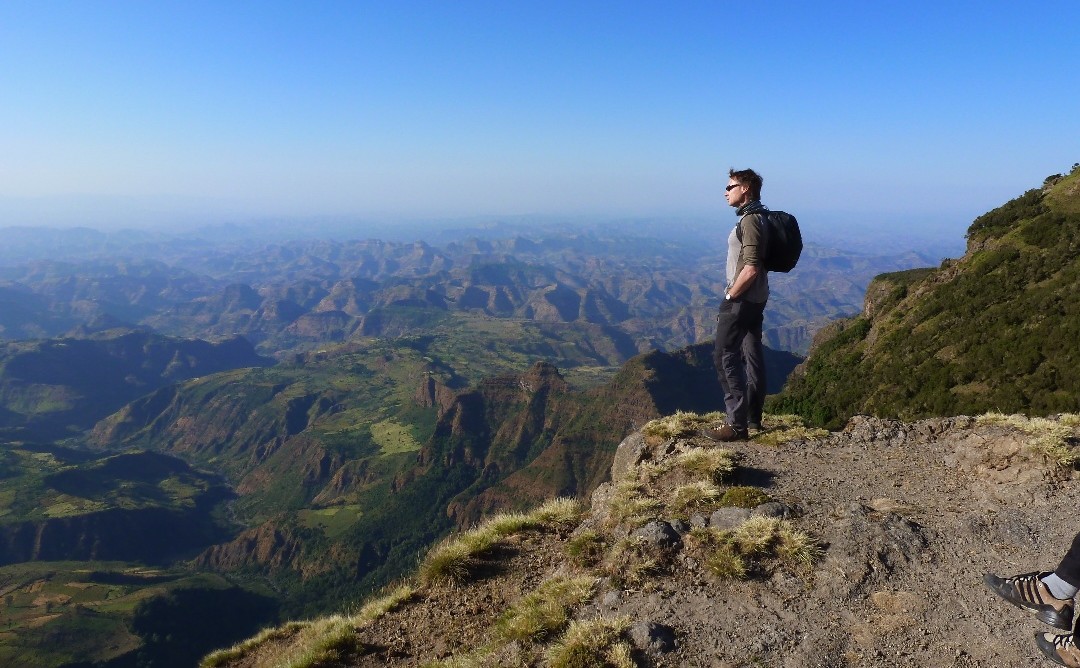
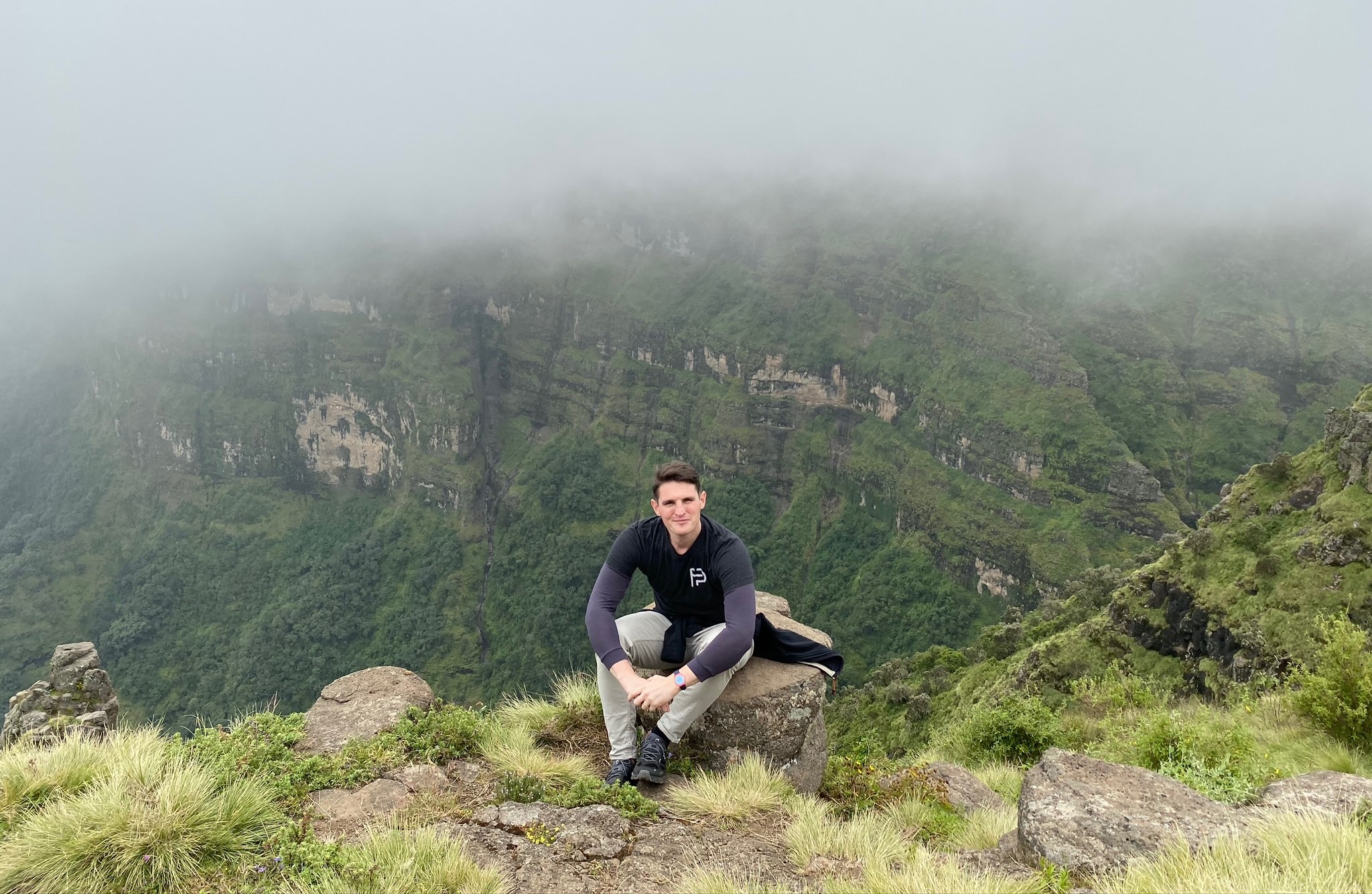
In addition to the spectacular scenery, the region contains a number of unusual botanical phenomena and some of the rarest animals in the world. Situated between 4430 and 1900 meters, the Simien Mountain national park is interesting for the uniqueness of its endemic animals, the beauty of its flora and the majestic landscape.
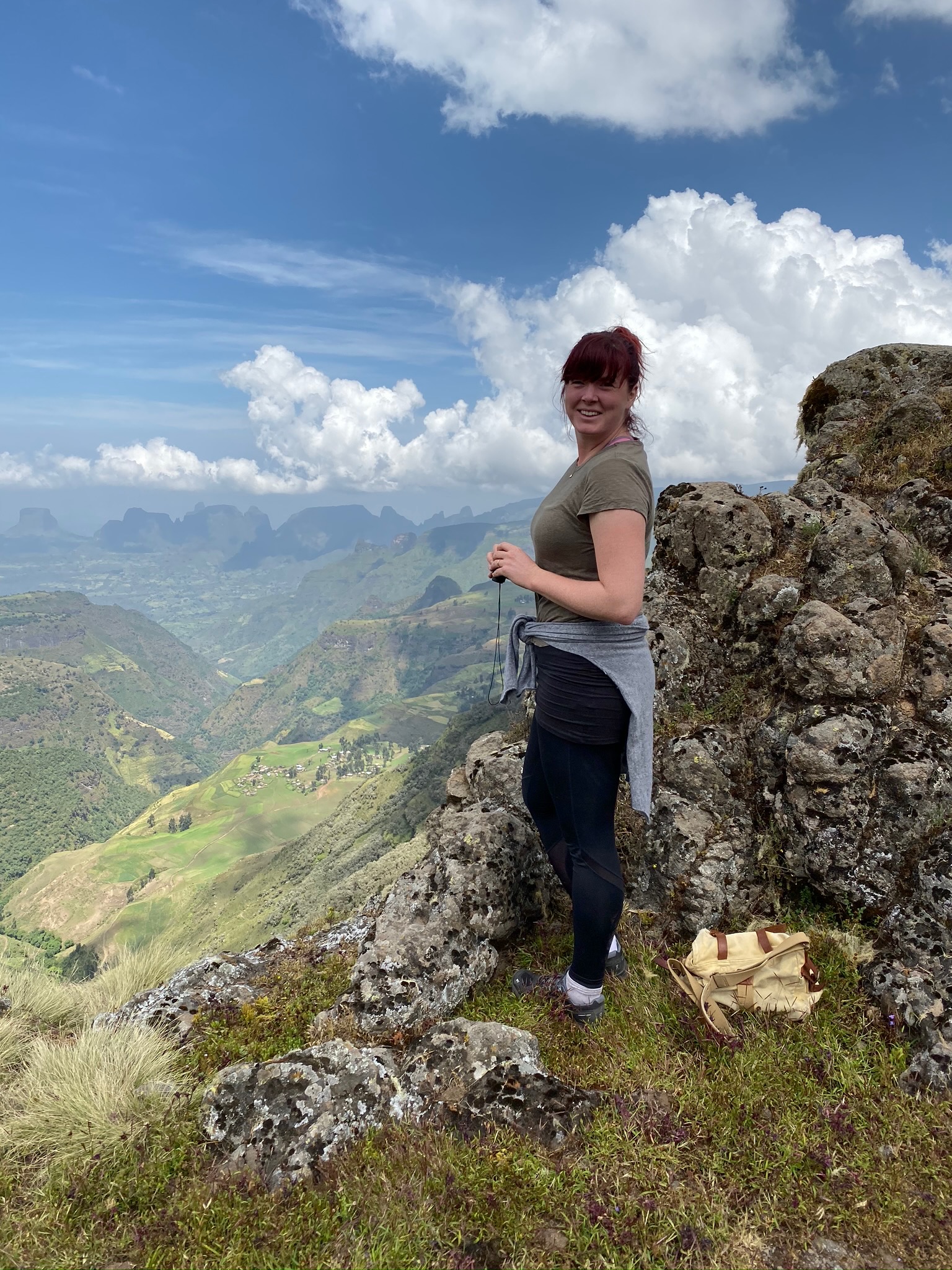
Trek While Enjoying Scenic Views of Simien Mountains
The Simien Mountains National Park was added to the world heritage site list in 1978. 57 tree species and variety of herbaceous plants, 22 large, 13 small mammals & about 180 bird species have been recorded, from these Walia ibex, Ethiopian wolf, Menelik’s bushbuck and the Gelada baboon are endemic.
Buyit Rass Campsite
The Buyit – Rass campsite is located approximately 22km North -East of Debark town in the Simien Mountains range at an altitude 3,100m and mean annual temperature 11.5℃. The campsite is accessible by vehicle both in wet and dry- seasons. However, visitors advised to use trekking with riding horse and pack animals.
There is a good lodge (Simien Lodge) but also available good camping sites for visitors. Buyit – Rass campsite is a part of the beauty of the Simien Mountain massif, which comprises the scenic mountains, range and spectacular escarpment to the north face of the campsite.
The forest vegetation varies with altitude beginning with high forest at lower altitudes in the escarpment extending to the high plateau touched Afro Montana evergreen bush land and thicket.
Simien Mountains National Park – Vegetation, Birds, And Villages
Among the major tree species are Allophylus abyssinicus, Arundinaria alpina, Buddleja polystachya, Discopodium penninervium, Dombeya torrida, Erica arborea, Hagenia abyssinica, Junipprus procera. Moreover, shrubs and herbs are also several.
The common animals for this campsite are the Gelada baboon (Theropithecus geladi) endemic to Ethiopia. You may also see common Jackal (Canis aureus) and Klipspriner (Oreotragus oreotragus).
The commonest bird species are Wattled ibis (Bostrychia carunculata), Alpine chat (Cercomelasordida), Black kite (Milvusmigrans), and White collard pigeon (Columbaalbitor ques) Lammergeier/ (Gypaetus barbatus), Verreaux’s Eagle (Aquila verreauxii) and Augur buzzard (Buteoru fofuscus).
The traditional lifestyle and culture is one of the touristic attractions of the Simien Mountains National Park and the surrounding areas. Both the Christian and Muslim people of the area underline the friendliness and good behaviour. Local brew is also another attractive tradition.
The Sankaber campsite is located approximately 38km North-East of Debark town in the Simien Mountain range at an altitude 3300 asl, and mean annual temperature 10.4°c, which is accessible by vehicle both in wet and dry seasons.
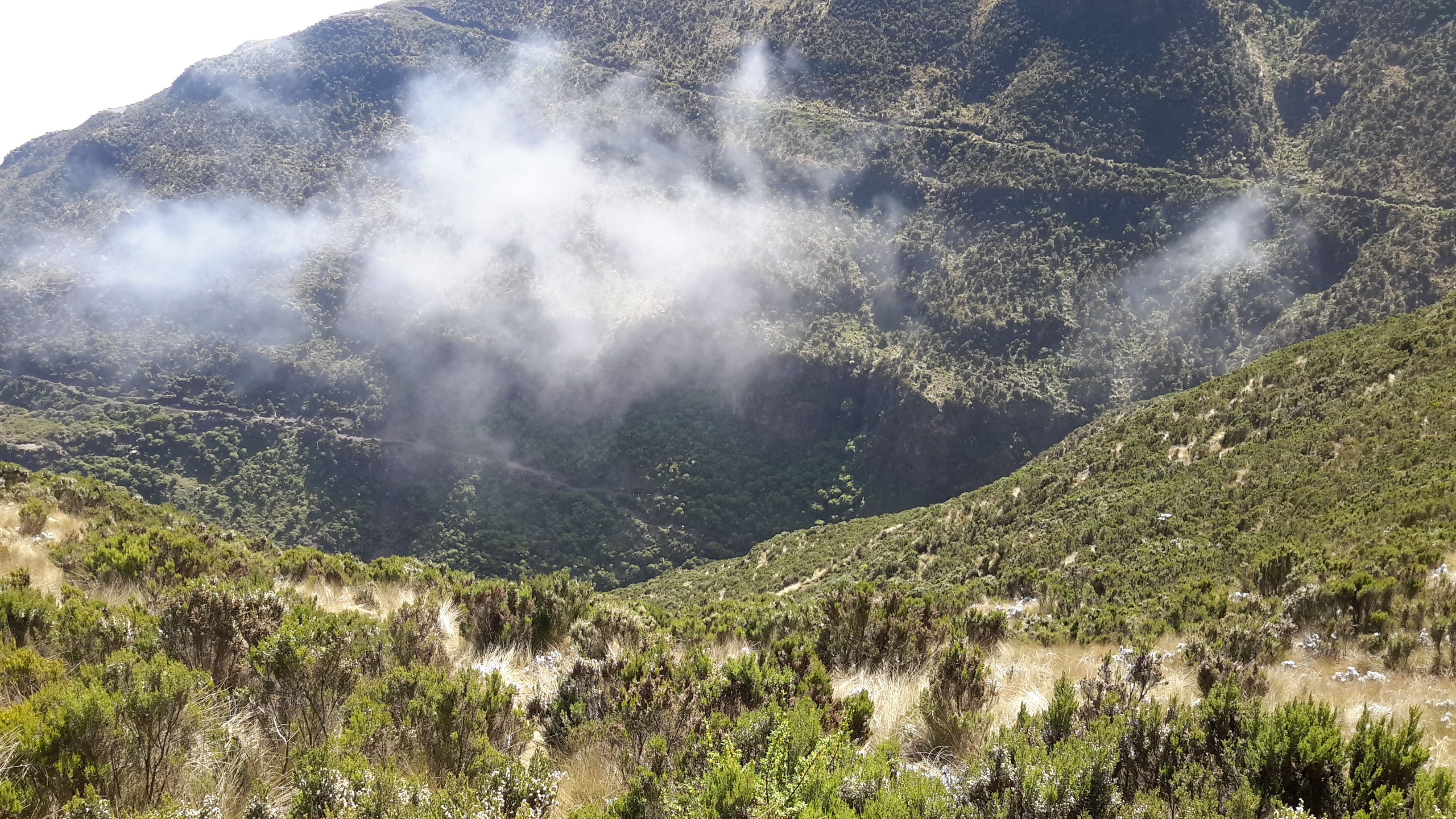
Trekking around Sankaber camping site in the Simien Mountains
Sankaber campsite is a part of the Simien Mountain massif, which comprises the scenic Mountain ranges and it’s impressive escarpment both in the North and the South faces of the camping site. There is small lodge with a limited number of beds and self-catering. The park office also offers special camping sites for visitors
Sankaber camp is a part of Afro-Montana evergreen bush land and thicket and Dry Transitional Montana forest. Among the dominant tree species, Allophylus abyssinicus, Ekebergia apensis, Erica arborea, Hypericum revolutum, Olea species, Pittosporum viridiflorum, Rapanea melanophloeos. Hagenia abyssinica, Rosa abyssinica, Solanecio gigas, Solanim species, and other several grass and herb species.
The commonest animals for the campsite are the endemic Gelada baboon (Theropithecus gelada) Klipspringer (Oreotragus oreotragus). However, You have also more chance to see the two endemic Walia ibex (Capra ibex Walie) and the Menelik’s bush buck (Tragelaphus scriptus Menelikis)
Visitor may see several bird species. Among them the commonest are Erckel’s Francolin, White rumped babbler, Olive thrush, Ground scraper thrush, Alpine chat, Abyssinian woodpecker, African white-backed vulture, Rueppell’s ariffon, Lammergeier, and Montane night jar.

Trekking in Simien Mountains – Gich and Chenek
The Gich campsite is situated approximately 48km. North East of Debark town in the Gich Plateau at an altitude of 3600m asl and mean annual temperature 7.7 °. Gich campsite is not accessible by transport. However, half way from Sankaber campsite is accessible by car and vehicles. But the park office strongly recommended for tourist, to use riding and pack animals.
There is no lodging facilities /accommodation in the Gich campsite. However, there is campsite for fixing tents. If any tourist want to admire local culture and rura1 life style it is possible to pass over nights within the Gich villager’s hut.
Gich camp is the best part of the spectacular Simien Mountain massif, which comprise the scenic mountains range impressive escarpment superb viewpoints and mountains submit, such as Imet-gogo, Seha, Kedadit and Gidergot and is the best place to watch endemic mammals, birds and plant species.
Gich camp is part of Afro Mountain ever green bush land and mixed Afro alpine communities. The lower part of the plateau dominated by Erica arborea and Hypericum revoltum. However, the Lobelia rhynchopetalum, Helichrysum and Fastuca gelbertiana species are dominating the high plateau. Nevertheless, Fastuca gelbertiana is the only endemic grass in the Simien Mountain National Park.
There are flagship mammals in this campsite such as the Walia ibex and Ethiopian Wolf and the Gelada baboon. The Walia Ibex is mainly found on the escarpment. However, the Ethiopian wolf and the Gelada baboon are usually found in the high plateau. The commonest from thus are the Gelada baboon. There are also thirteen small mammals among them the common species white tooth shrew, narrow headed rat and unstriped grass rat endemic to Ethiopia.
Visitors can see several bird species among them, the most spectacular and the magnificent bird Lammergeier, Thick-billed raven, Wattled ibis, Alpine chat, Pied crow, Chestnut-winged starling, Chough, Whit-collared pigeon, Augur buzzard, Towny Eagle and Common European kestrei are common in this area. The traditional lifestyle and culture of the Muslim people is one of the touristic attractions of the Gich campsite.
The Chenek camp site is located approximately 58km North-East of Debark town in the Simen Mountains range at an altitude of 3600m asl mean annual temperature 8.8℃c. The campsite is accessible by vehicle both wet and dry season.
Great Trekking in Chenek – Simien Mountains
Chenek campsite is extremely spectacular campsite, which contains the scenic mountains range, impressive escarpment super viewpoints, and mountains submit such as Mount Buhit, and varieties of plant and animal species. Chenek camp is found in the mixed Afro-alpine community zone.
The lower part of the plateau is dominated by the Gaint Lobelia rhynchopetalum and Erica arborea. However, in the high plateau the dominant and common species are Helichrysum and Fastuca species. The Simen endemic Rasularia simensis is also found in this camp.
Visitors have more chance to see the endemic mammals Walia ibex, Ethiopian Wolf and Gelada baboon. However, Kilpspringer and common Jackal are also common for this campsite.
There are several bird species in this camp. However, the commons are Erckel’s Francolin, White collard pigeon, Alpine chat, Ankober siren, Lammergeier, Rueppells ariffon, Wattled ibis, Augur buzzard, and Thick-billed raven.

What Our Guests Said About Ethiopian Trekking In Simien Mountains

Patricia Thomas
“There were so many, from feeding Hyenas, to getting up close and personal with a crocodiles and hippos, Lalibela with its amazing Rock churches, visiting the tribes In the South, and meeting many Ethiopian people who are kind, generous, helpful, together with a great sense of humour.”
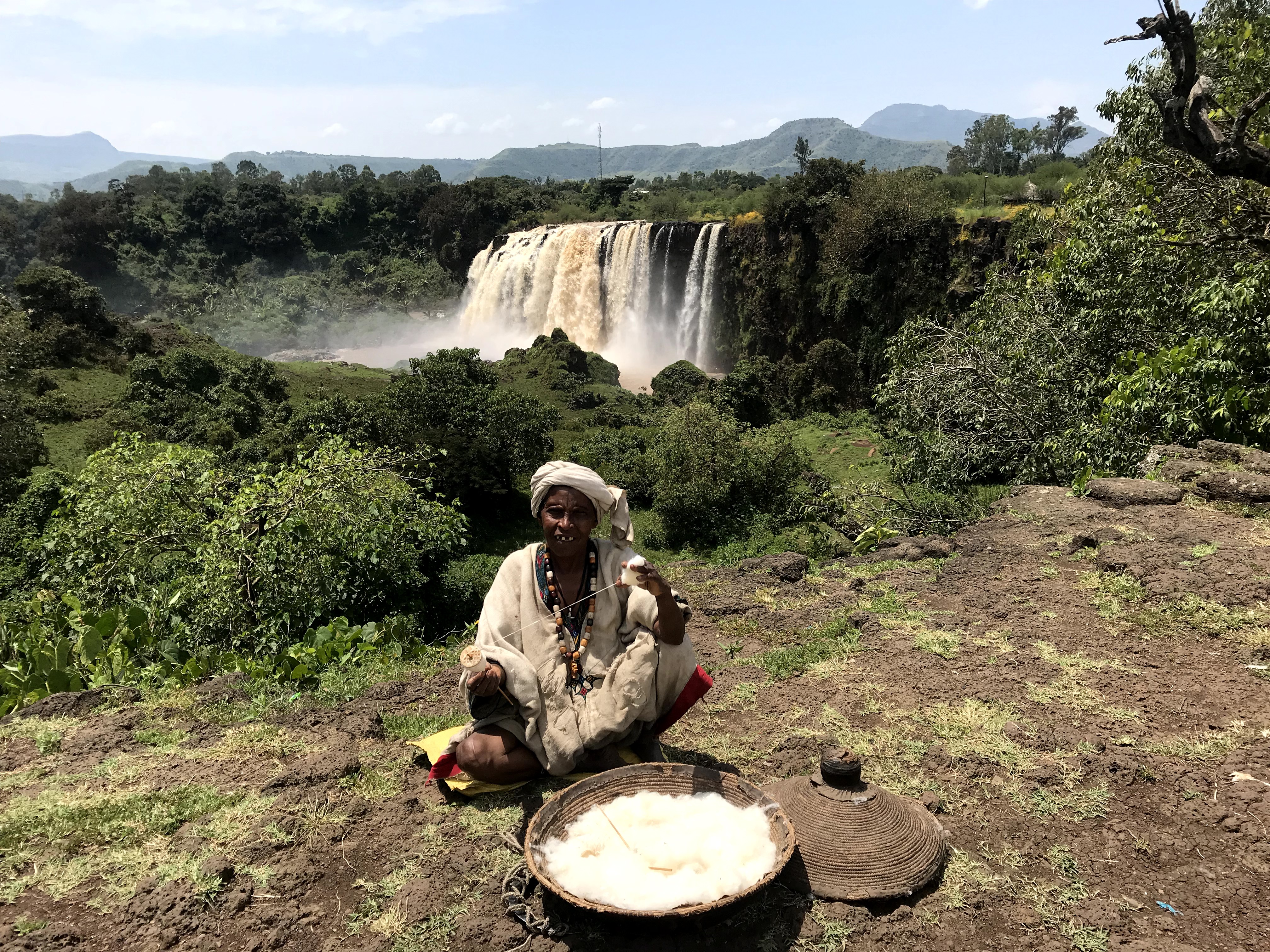
Dinah Hill
“Every day held something special and memorable from the extraordinary architecture of the churches of Lalibela and the palaces in Gondar, the incredible and varied scenery from the roof of Africa that are the Simien Mountains, down to the fascinating tribal areas of the Omo Valley and everywhere people busily going about their daily lives.
.”
More Interesting Facts About Ethiopia Simien Mountains Trekking
Walk from Gich to Immet gogo, Saha and Kedatit. These three places are perhaps the most spectacular places in the Simien Mountains. The time that will take to complete this hike is about 5-6hrs and then back to Gich (Geech) Camp and over night here. The trek from Gich to Chenek covers approximately twelve Kilo meters (six to seven hours), following a path along the escarpment edge. Just before arriving into Chenek you will encounter the Kurbet Metaya viewpoint at 4070 meters – this viewpoint is actually a gap in the precipitous cliff – which reveals impressive views of the steep mountain faces to the west and the lowlands areas to the left.
The tightly clustered houses (tukuls) form the village of Dihwara, tucked below a cliff, are also visible from this viewpoint. Chenek campsite is spectacularly located in a beautiful valley at the foot of the Bwahit Peak. Strategically placed benches allow for the opportunity to take in the expansive views back toward Imet Gogo, especially beautiful in both the dawn and dusk light. A large troop of gelada baboons are common here and Walia Ibex is also often seen on the rocky escarpment edges here.
The longest trekking day, consisting of a total of about ten hours is from Chenek camp, 3650 meters, the path to Ambiko campsite crossing through Bwahit Pass. Leaving Chenek, you will be faced with a two-hour ascent to the top of Bwahit Pass at 4200 meters. From the top of the pass views open up to the east over Mesheha Valley to the Dashen mountain range. Looking back the impressive rock formations of Imet Gogo loom large.
From Bwahit Pass the path leads steeply down and across the Mesheha Valley. Here you will notice an increase in temperature as you descend down to the Mesheha River at 2800 meters before climbing slightly to reach Ambiko campsite at an altitude of 3100 meters.
Trekking to the highest summit Ras Dashen
Trekking to the highest summit involves sixteen kilometres (ten to eleven hours). The path will widen its way over eight kilometres and ascending over 1400 meters to Ras Dashen. To begin, the path climbs steeply through barley fields and fallow land before clearing the vegetation zone and reaching mountain steppe at around 3700 meters. From there, the path flattens out as it traverses ridges in the shadow of Ras Dashen. Just below Dashen Pass, at around 4250 meters, an impressive moraine can be distinguished. A moraine is material transported by a glacier and then deposited.
This moraine was formed 20,000 – 14,000 years ago in the last ice age when the Simien Mountain tops had small ice caps. The final stretch to the summit involves an exciting climb / scramble up and over large boulders to the summit. From atop the summit of Ras Dashen, 4543 meters, you will be amazed by the far-ranging view which spans more than ten thousand square kilometers. On the west, the steep faces of peaks in the National Park are visible whilst to the north and east the Tekeze valley is visible.
From the summit you will need to return along the same path to return to your camp at Ambiko. This campsite, situated along the banks of a stream and amidst a small village, is a project of the local church and a donation for the facilities is gratefully accepted.
From Ambiko the path leads us back down to the Mesheha River (2800ms). Your other destination will be Sona, which is situated at an altitude of 3100 meters, and located at the northern reach of the Mesheha Wenz (River.) A great day to take in some more incredible views of the Simien Mountains.
Trek to the lowland area on your way back
The lowland area walk from Sona camp, the path to Mekarebia camp via Lamo River from the camp 1000mt will be faced with a two-hrs ascent to the Lamo river. At the river you take your time, swimming and washing some clothes is possible and after you have your lunch here and then two- hrs to the camp totally including the break is about 6hrs. Mekarebia camp is at an altitude of (2200metres).
The warmer day walk is from Mulit camp to Mekarebia across Derek Wenz river here is also the very good swimming pool you can swim and after the river about 1 hour walk going up to Awaza village and then all the way to the camp is mostly flat totally it is about (6-7hrs) walk. Mulit is at an altitude of (2000metres).
Concluding your Simien Mountains trekking, you will be back to Gondar, the medieval capital of Ethiopia boasting with its large royal enclosure containing grand castles, palaces, houses and outbuildings. You will visit King Fasiladas’s palace, the oldest and perhaps most Impressive of the castles. Beside the castle are various ruined buildings including the remains of a bathing pool, a chancellery and a library of Fasiladas’s son Yohannes I. You will also visit Debre Birhan-Selassie, one of the country’s most famous churches that lie 2km to the north east of Gondar.
We Like To Hear From You


More Ethiopian Treks for You
We offer a wide range of tours in Ethiopia all the way from North to South and East to West. If you are keen on mountains trekking, ancient history, or tribal culture, we are here for you. Click on one of the images below as we love you to explore more on what Ethiopia offers.

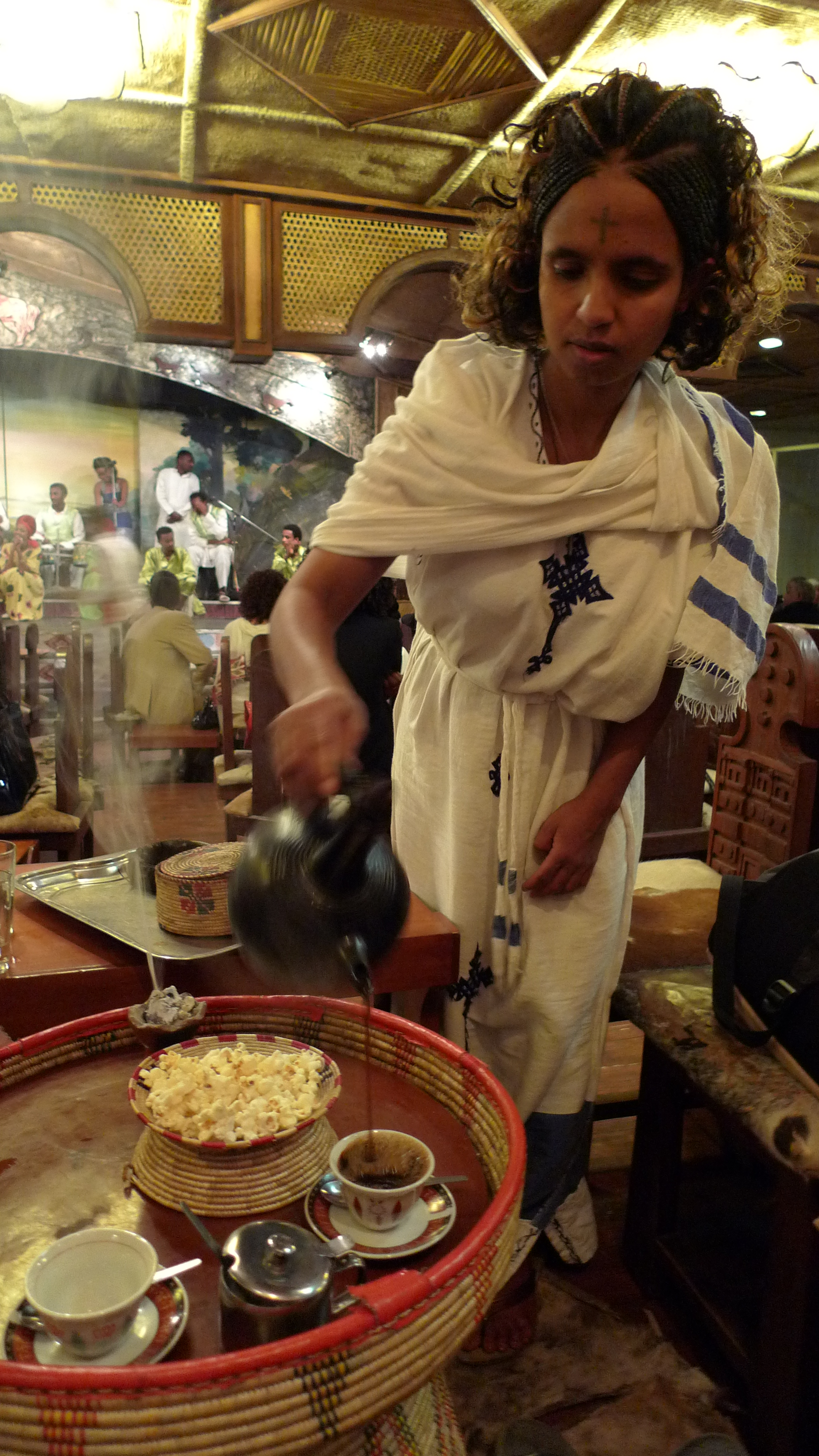
 Ethiopian Treks