



Discover Ethiopia, Omo Valley, A Mosaic Of Tribal Culture
Our Cultural Trekking helps you discover and immerse yourself deep into Ethiopia’s tribal culture. Ethiopia is a mosaic of people with more than 80 languages, different life styles, customs and cultures. People’s livelihoods vary from farmers to factory workers, business people and academics.
Ethiopia represents a remarkable mosaic of humanity. The latest census lists 94 ethnic groups, which speak a total of more than 70 languages belonging to four major language families: Semitic, Cushitic, Omotic, and Nilo-Saharan.
The largest number of ethnic groups is in the south, particularly in the lower Rift Valley and the South Omo Valley. Visitors are invariably amazed that so many distinct cultures have developed in such close proximity.
The lower Omo Valley in Southern Ethiopia is known as the oldest human occupied landscape confirmed by the paleo-archaeological findings. It is an area where the first humans were living & registered as a world heritage sites in 1980. Here are found human fossils dating from between 1.3 and 1.9 million years.
This destination offers a great opportunity for visitors who are interested to see the diverse cultures.
Enjoy Our Cultural Trekking Holidays to Omo Valley
See the beautiful land and scenery as you go to visit the Dorze village, famous for its huge bee hive huts. Also, do not miss Lake Abaya, the largest of the Rift Valley lakes, and Lake Tchamo, along with the impressive crocodiles at the so-called crocodile market.
Netch-Sar Park, adjacent to Lake Abaya and Tchamo, is a 750 km² national park that ranks among the most beautiful game reserves in Africa. It encompasses parts of the lakes as well as the mountains known as the ‘Bridge of God,’ which lie between the two lakes.
The stunning Netch Sar Park is noted for its scenic beauty and diverse wildlife, yet it remains one of the least visited areas.
If you arrive on a Monday or Tuesday, you can explore a colorful market in the Omo Valley, which offers the best opportunity to experience the local culture.
Visit Turmi, the main town of the Hamer people, known for its market and its residents’ fine pottery and remarkable hair styling. You should also not forget to explore Konso, a community with an ancient complex and a fascinating culture of its own.
Ethiopia Treks to Hamer Tribes
The Hamer are renowned throughout Ethiopia – and beyond. The tribe, whose population numbers around 45,000 are agro – pastoralists: They focus primarily on raising cattle but also on cultivating sorghum, millet, tobacco, and honey.
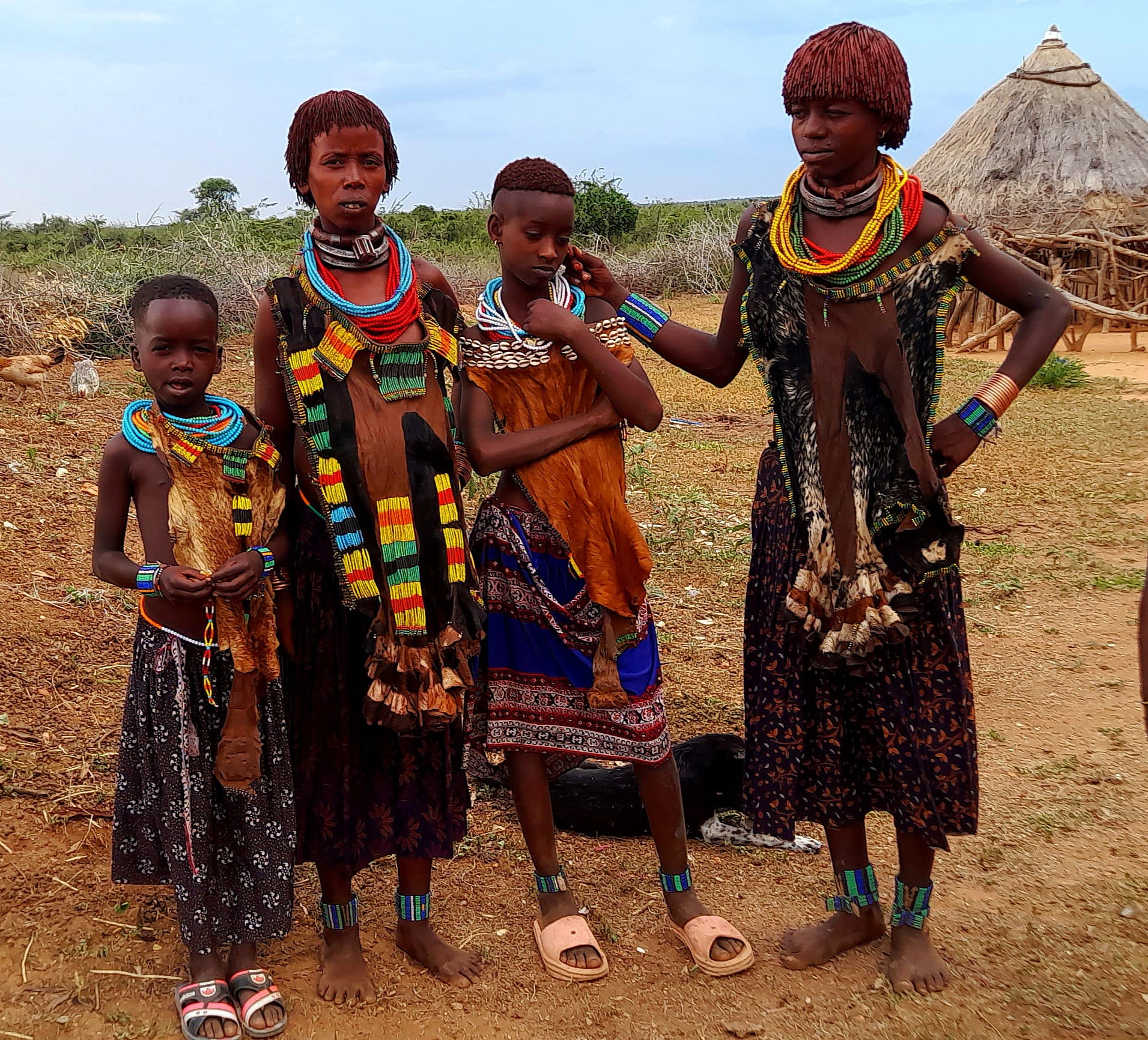
Both women and men are striking to behold. Women, who usually twist their hair into red tresses using mud and butter, often wear leather skirts dotted with cowry shells, bead necklaces, and copper bracelets. Men who have killed an enemy or large animal in the past year wear their hair in buns.
The most important event in the life of a Hamer male is the bull-jumping ceremony a rite of passage and a precondition for marriage. A row of eight to ten bulls is formed and the naked initiate must traverse the row, leaping from one animal to the next-four times.
If successful, his male relatives then flog the backs of his female relatives, who see this as a chance to prove loyalty and valour. Hamer territory is accessed most easily through the village of Turmi.
Ethiopia Tsemai Tribes
The Tsemai speak an Eastern Cushitic language related to Konso, from where they are said to have migrated 150 to 250 years ago. The estimated 20,000Tsemai are agro – pastoralists who raise cattle and cultivate primarily sorghum and maize. Some also fish and hunt.
The Tsemai participate in ancestral worship they commonly make animal sacrifices on their graves while making requests for health and other favours. Like the Hamer, Tsemai boys must complete the bull-jumping ceremony to pass into manhood. The Tsemai appearance is among the most colourful of the southern tribes. Thick bands of brightly hued beads are worn around necks and waists.
Men often don short cloth wraps around their waists in bright shades of blue, purple, and pink. Women can also be seen with half gourds worn like berets over their red mud tresses. The best place to see the Tsemai is in and around the town of Weyito.
Ethiopia Treks in Mursi and Surma Tribes
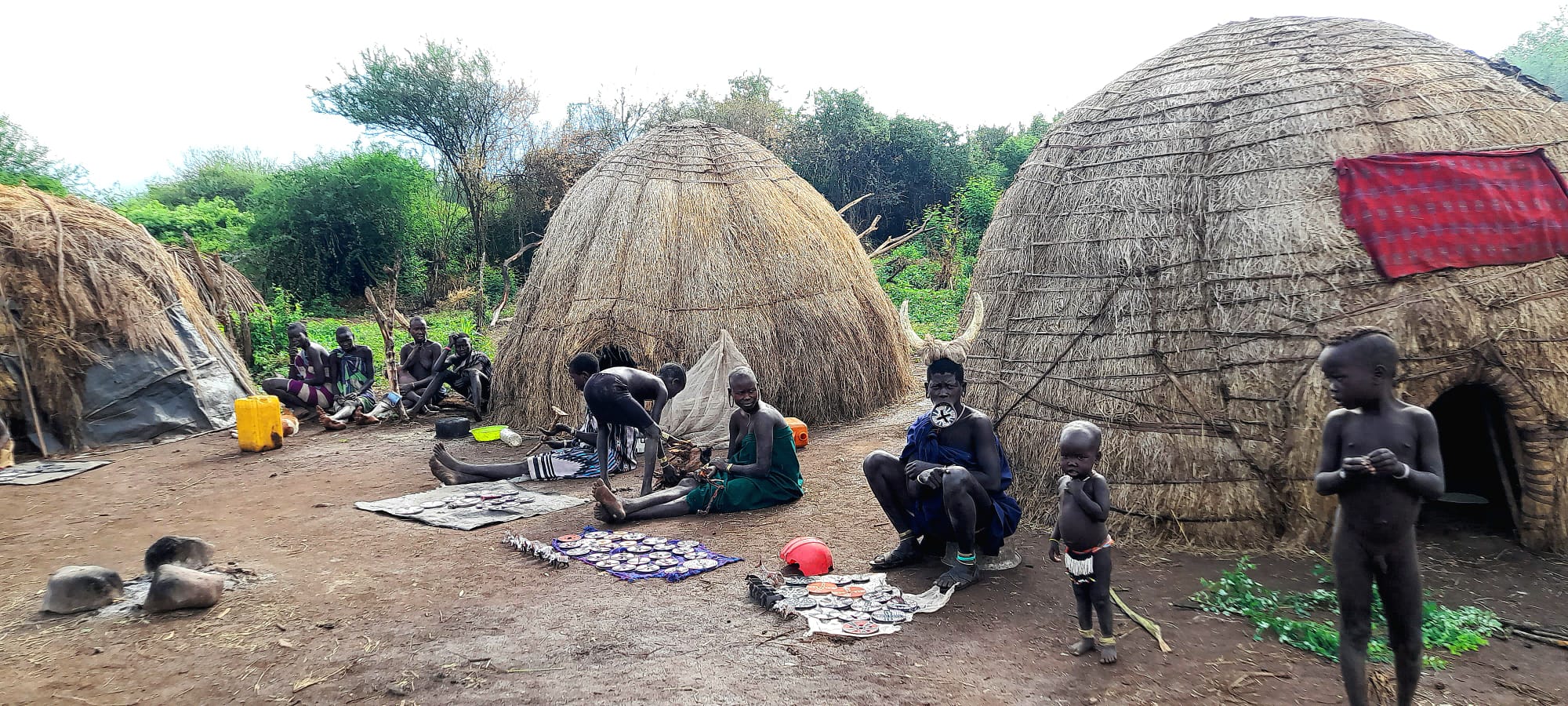
Perhaps no other tribe has been the subject of such academic and touristic curiosity, in large part because of its distinctive appearance. The roughly 7,500 Mursi, whose language is in the Nilo-Saharan family, are semi nomadic. While they are primarily pastoralists, tsetse fly infestation in some areas has prompted the need for agricultural activities.
A Mursi woman is highly recognizable because of her lip plates, a sign of beauty whose size signifies dowry amount. Upon reaching adolescence, a girl’s lower lip is cut and a clay or wooden plate is inserted. As her lip stretches, progressively larger plates are inserted. Men also have a challenging path to marriage.
They must emerge victorious from a stick fight called donga. The loser is often beaten nearly to death, while the winner is serenaded by girls standing on a special platform. The villages of the nomadic Mursi change location but can be found around 60 km (37 mi) west of Jinka, generally used as a base for day trips.
Ethiopia Treks in Karo Tribes
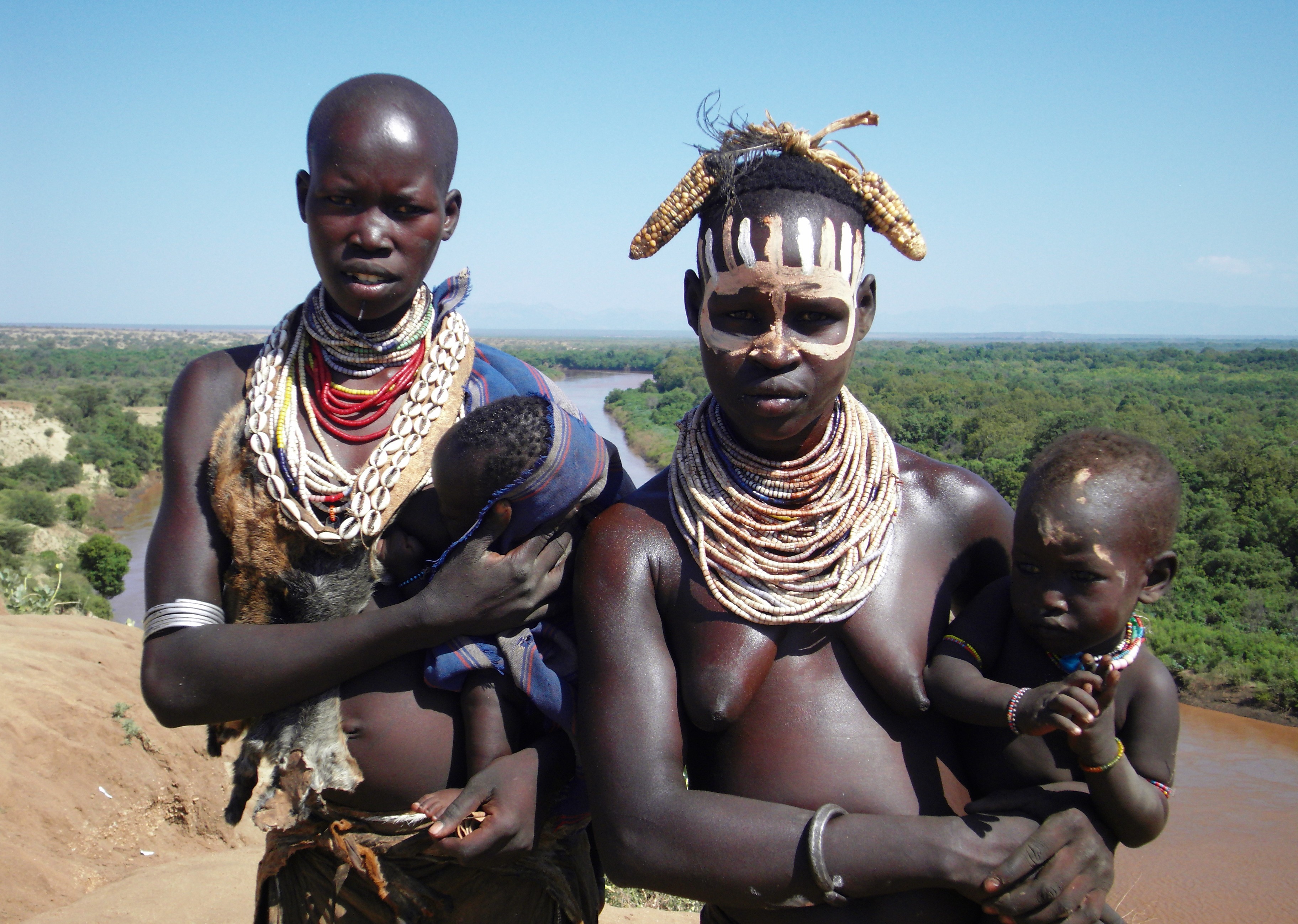
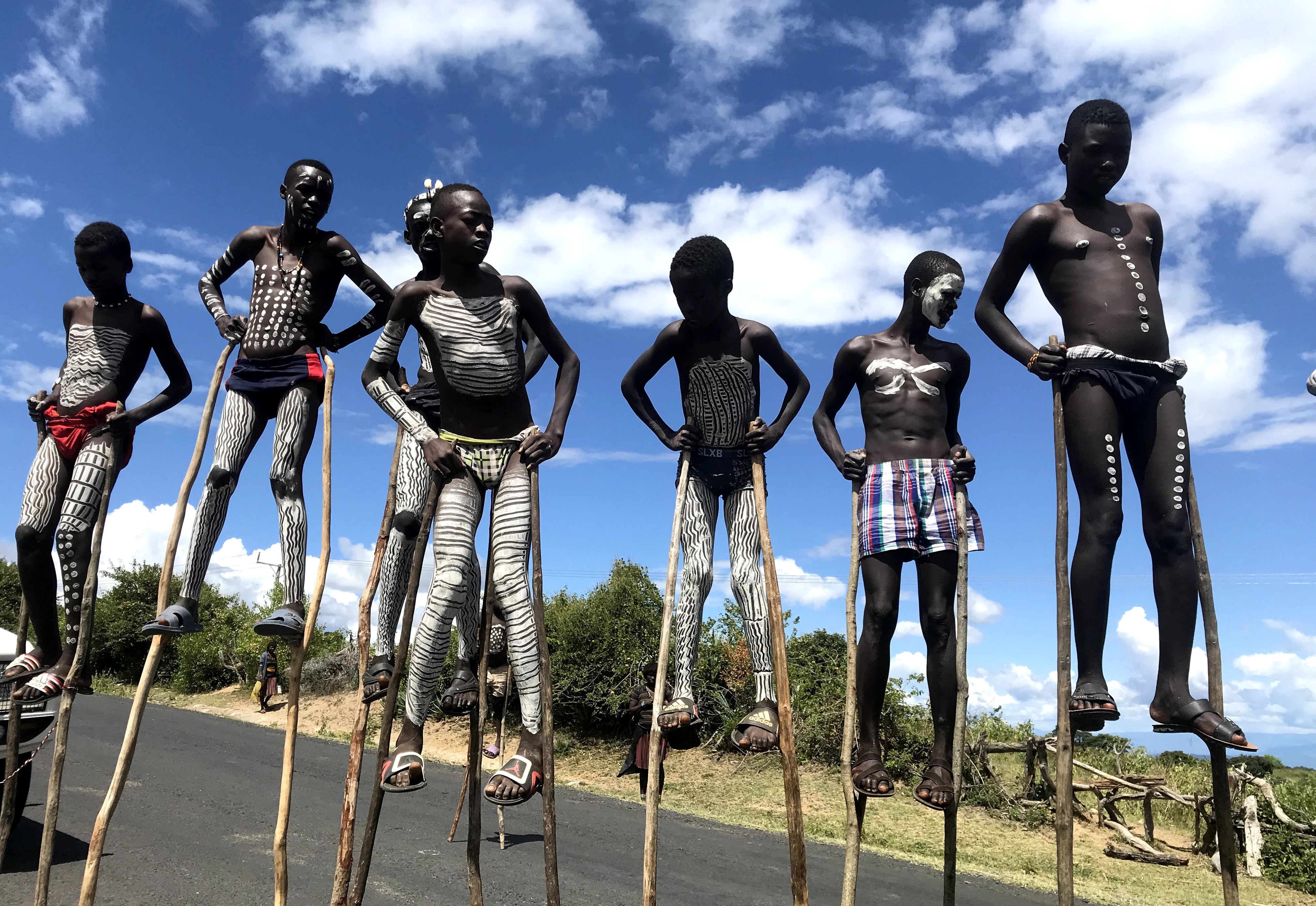
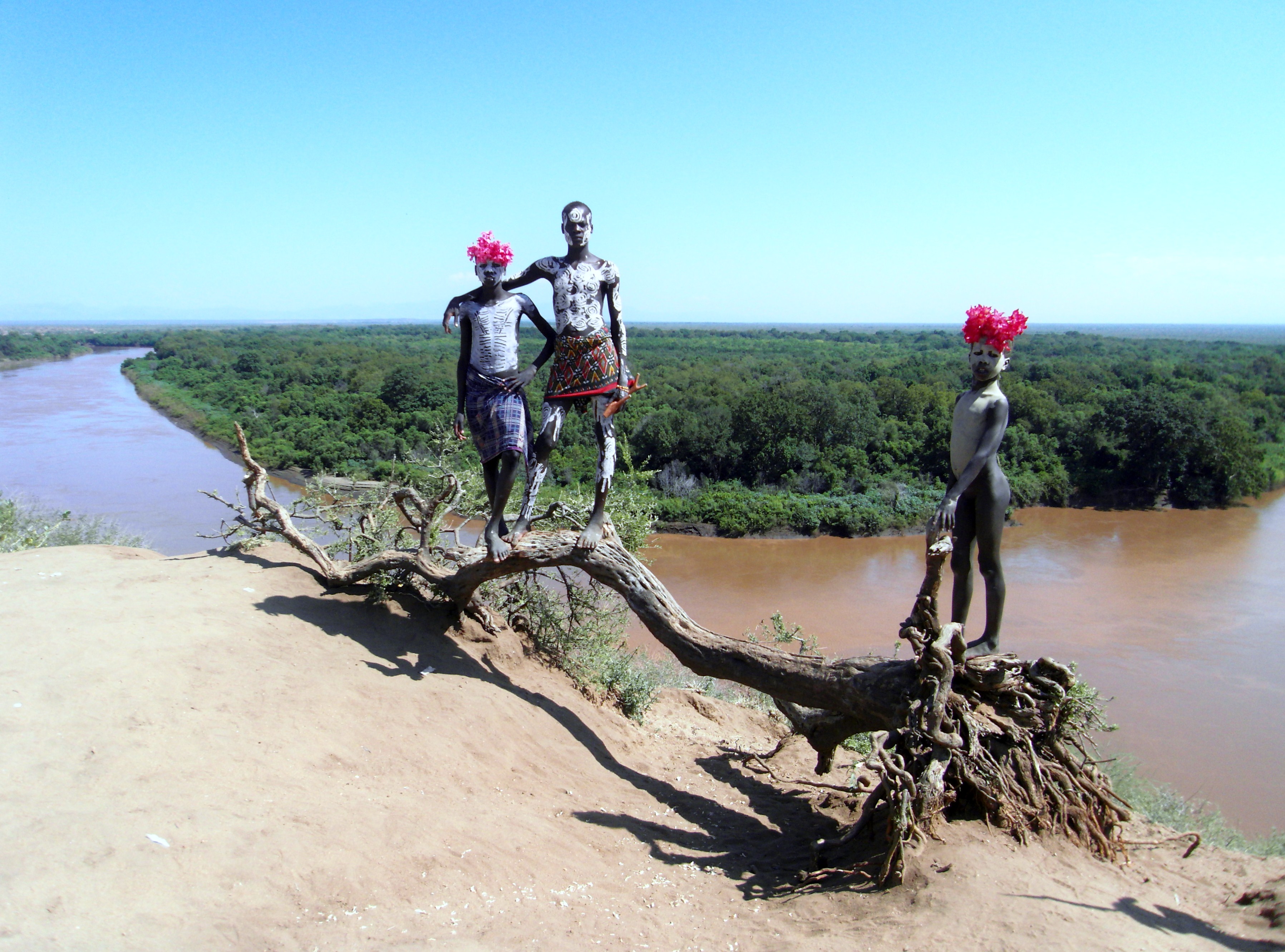
The Karo are best known for their creative body painting. For dances and festivals, they decorate themselves with paints made from white chalk, black charcoal, yellow stone, red iron ore, an plant oils. A common design: white dot that emulate the spotted guinea fowl.
Women wear shell necklaces, beaded belts, and brass or copper bracelets. Scarification, common for both sexes is done for beautification and, in the case of men, to signify the killing of enemies or big game. Men and women also have pierced holes in their lower lips, into which they insert various adornments
With a population below 1,500, the Karo are one of the south’s smallest groups. They speak an Omotic language similar to that of the Hamer. Originally pastoralists, the Karo primarily rely on maize, sorghum, and bean cultivation. The best launching point for visiting Karo villages is the comfortable Murelle Lodge, on the Omo River. Alternatively, Karo villages can easily be reached on a day trip from Turmi.
Ethiopia Dorze Village
Ethiopia’s most admired Dorze craft colourful gabbis (robes) and netelas (shawis) as well as fine baskets pottery, and leatherwork, Enset (faise banana) the staple food is found in nearly every compound, along with cabbage, tobacco, and various spices.
The compounds are major draws, with unique bee hive shaped huts (wajja) up to 10 meters (33 feet) in height. Wajja are made from woven bamboo, with enset leaves providing the roof thatching. Light and cleverly designed, wajja can be easily picked up and moved when termites invade the area, Incredibly, wajja last 40 to 60 years. The spacious interior’s partitions separate the living rooms, bedroom, and a space for cattle.
The roughly 6,000 Dorze speak a language from the Omotic family and are believed to have emigrated to their highland area at least 500 years ago. Today, most practice Orthodox Christianity. Dorze can be easily accessed by traveling the 37-kilometer (23-mile) road from the worth-a-visit town of Arba Minch.
Konso Tribes
When you see women wearing colorful double-layer skirts and men in blue-and-white-striped shorts, you’re in Konso territory. The roughly quarter-million Konso people are spread across 42 villages, most on hilltops and surrounded high stone walls-built centuries ago as a defence against outsiders and even marauders from other Konso villages. Elaborate stone terracing systems help retain moisture and prevent erosion on the steep hillsides. On these terraces the Konso raise sorghum, millet, corn, peas, and sunflowers.
The Konso are also well-regarded artisans. Weavers make the traditional skirts and shorts, smiths craft bronze earrings and bracelets, and woodcarvers create the famous waka funerary statues. The Konso language is in the Cushitic family, and while little documentation exists it is thought that the Konso have inhabited this area for at least four centuries. Karat Konso is located along the main road that extends from the town of Arba Minch to the South Omo Valley.
Dassanach Tribes
Inhabiting the dry, harsh territory near the borders with Kenya and South Sudan, the formerly nomadic Dassanech come from two ethnic groups. Of the eight Dassanech clans, six are believed to be from Somalia and the other two from Kenya. The estimated 50,000 Dassanech are pastoralists who raise livestock.
For the six clans with Somali origins, the most important ritual is the female rite of passage. During the dimi, up to ten families pool resources to celebrate the transfer to womanhood of their 12-to-14-year-olds. Brothers and uncles of the girls slaughter cattle for the feast, which is accompanied by a unique stick dance.
Trekking to Borena Oromos
The girls, along with their parents, wear newly made clothing and ornaments. The celebration is very costly, but if a girl does not undergo this ritual, her family’s belongings could be destroyed and their cattle stolen. The most accessible Dassanech villages are across the Omo River from the town of Omerate and can be reached easily on a day trip from Turmi.
These semi-nomadic pastoralists are considered the most traditional of all Oromo groups. Their culture is adapted to their harsh setting: a large stretch of hot, dry plains in southern Ethiopia and northern Kenya. The Borena tend to be tall, lean, and muscular. They are formidable warriors, though their culture discourages all unnecessary violence.
The Borena peoples’ most prized possession is their cattle, a unique breed distinguished by humps and short horns. Providing water for more than a million head of cattle is a major challenge. Centuries ago the Borena dug wells, some as deep as 30 m (100 ft).
These “singing wells” are the site of the most celebrated Borena ritual. Men form a chain along precarious ladders, along which they pass giraffe-hide buckets of water. Participants sing in unison, helping them maintain their dizzying pace. The best places to access the singing wells are near the town of Dublock,65 km (40 mi) south of Yabelo on the road to Moyale.

What Our Guests Said About Ethiopian Trekking To Omo Valley
Jaime PEREÑA
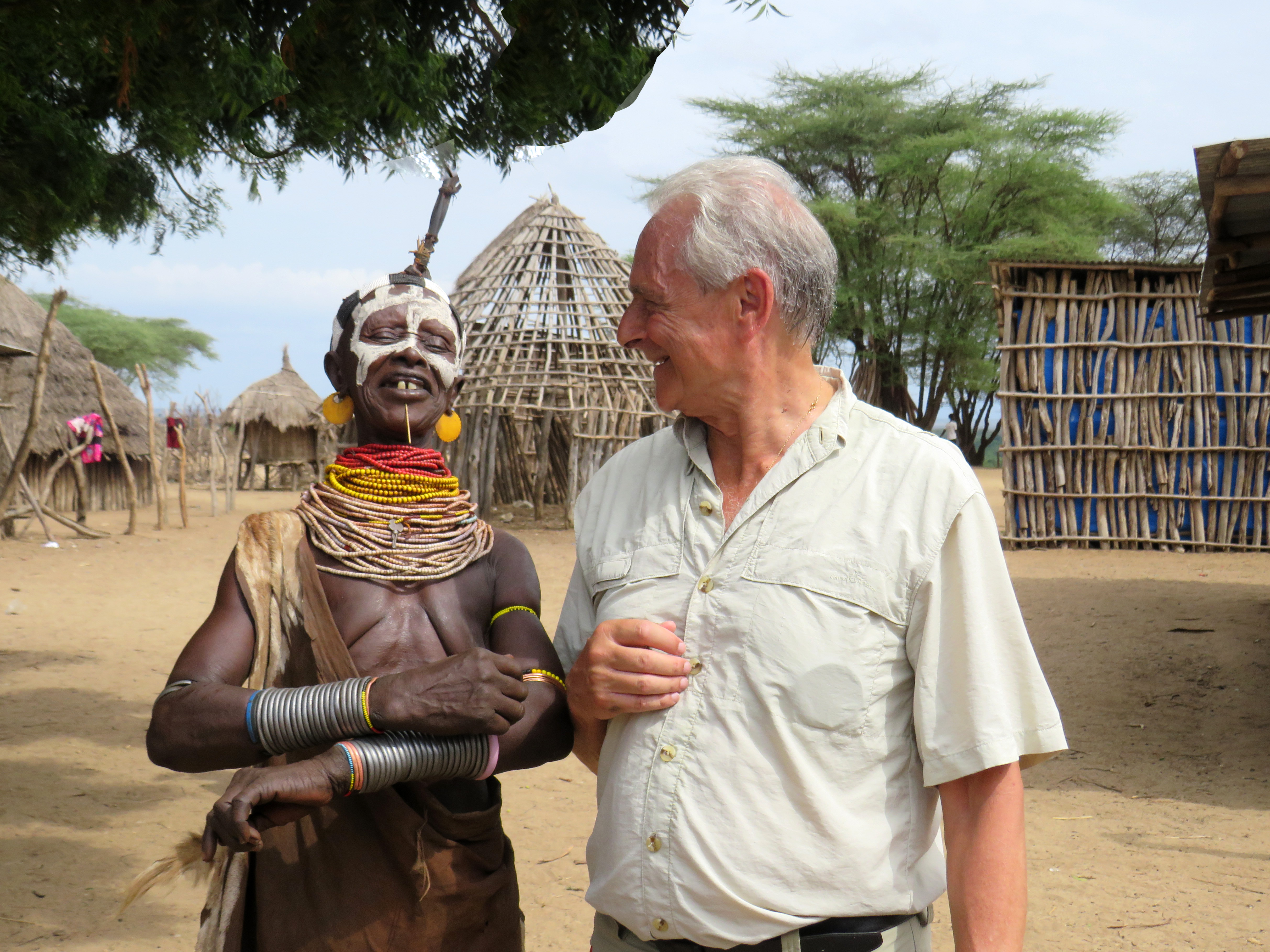
“You know how much we wanted to return to Ethiopia since our first trip in 2011. And, although logically the surprise factor has been less, we have really enjoyed the country, its landscapes, its variety and its people. Your efficiency, your know-how, your kindness and your hospitality have not been a surprise either, but they are all factors that contribute to make the trip especially pleasant and satisfying. Thank you for all this.”
Jesus Utrilla
“Dear Eskinder,
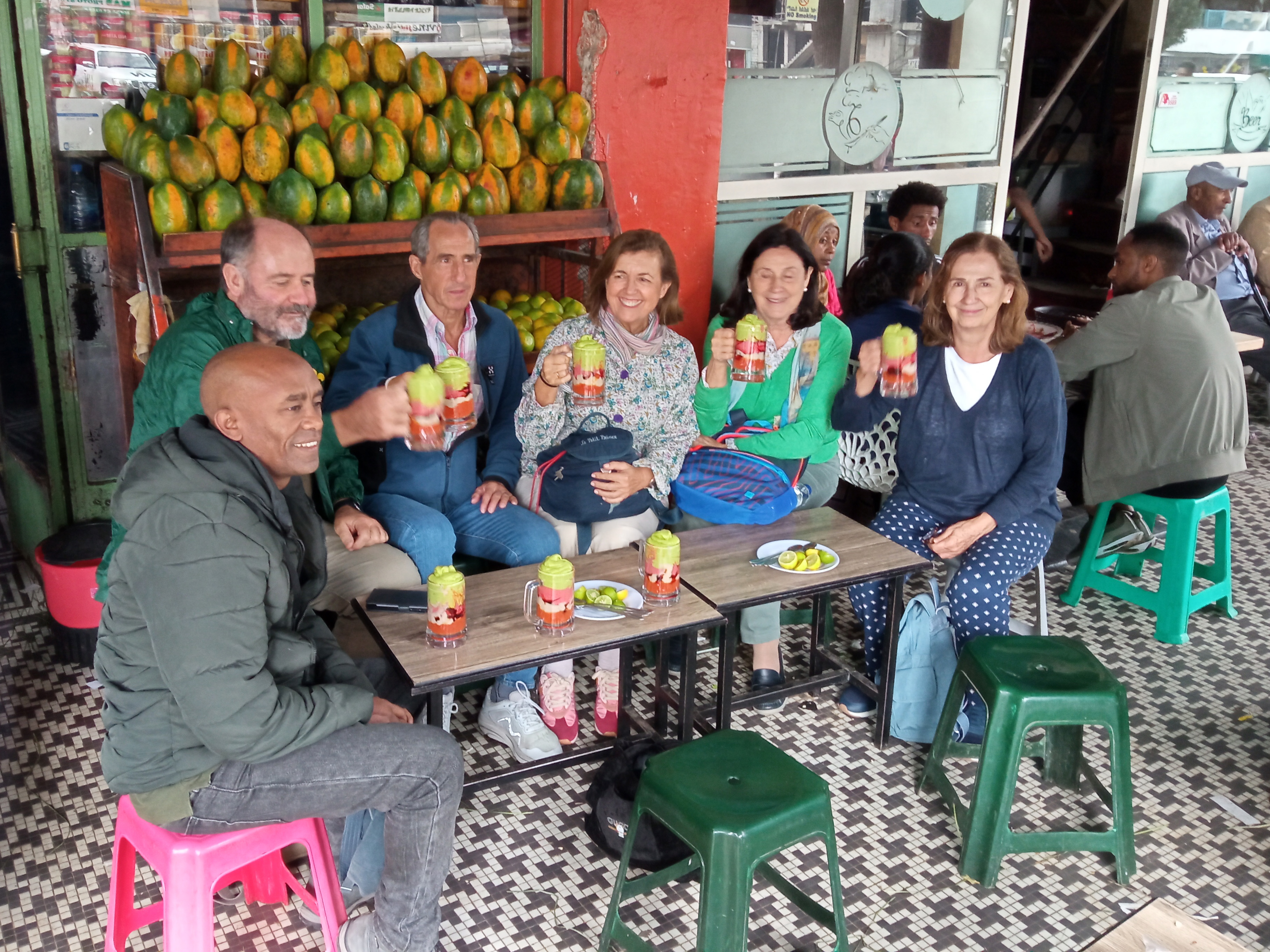
I would like to send you our sincere gratitude for the fantastic experience during last two weeks. It has been a nice mix between different areas of your wonderful and interesting country, always with the help of your professional and tireless partners, drivers and guides, who gave us some deep conversations and teach us a lot about different aspects of what we were watching. They also took care of us when needed.”
More Interesting Spots On Your Trek In Ethiopia Omo Valley
Lake Chamo and Abaya
One of the quintessential experiences of a trip to southern hippos and the impressive collection of Nile crocodiles seen at the crocodile tours generally last around two hours. Measuring 1,160 square kilo meters (448 square miles), this National Park, it is seldom visited by travellers in part owing to the feisty striking contrast to the deep blue Lake Chamo.
Tutiti Stelae Field
Wander through a field of more than 1,000 stelae (some of them unambiguously phallic) that vary considerably in size, with the largest gravestone measuring more than 7 meters (23 feet). Scholars estimate them to be from the ninth century. Hire one of the well-informed guides at the tourism office in Dila.
Wondo Genet Ethiopia
In 1962, Princess Tegnan-work visited this lush mountain area and decided to have a resort built for the royal family. Her father, Emperor Haile Selassie I, was so impressed that he named the area Wendo Genet, or “heavenly place.” Today it is a popular recreational spot and bird-watching destination. Hikes through the partially forested hills can be arranged with the local guides waiting outside the hot springs area.
Haile Selassie I’s Former Palace Where else can you sleep in the bed of a former emperor? Nine years after Haile Selassie I’s reign ended, his royal resort was taken over by the Wabe Shabelle, a state-run hotel chain. New concrete blocks were erected, but guests have the option of staying in his former house, where much of his furniture remains. Many of his personal belongings have been placed in a small museum in the former resort’s Princess Bar.
Hot Springs In The Great Rift Valley
Take an invigorating early morning soak in these famed thermal waters. The pools are made of concrete, but the setting has real natura beauty: A cold stream flows alongside the pools, and the flowering trees are filled with chirping birds. You will likely spot baboons, whose efforts to jump into the water are repeatedly thwarted by the pool attendants.
We Like To Hear From You


More Ethiopian Treks For You
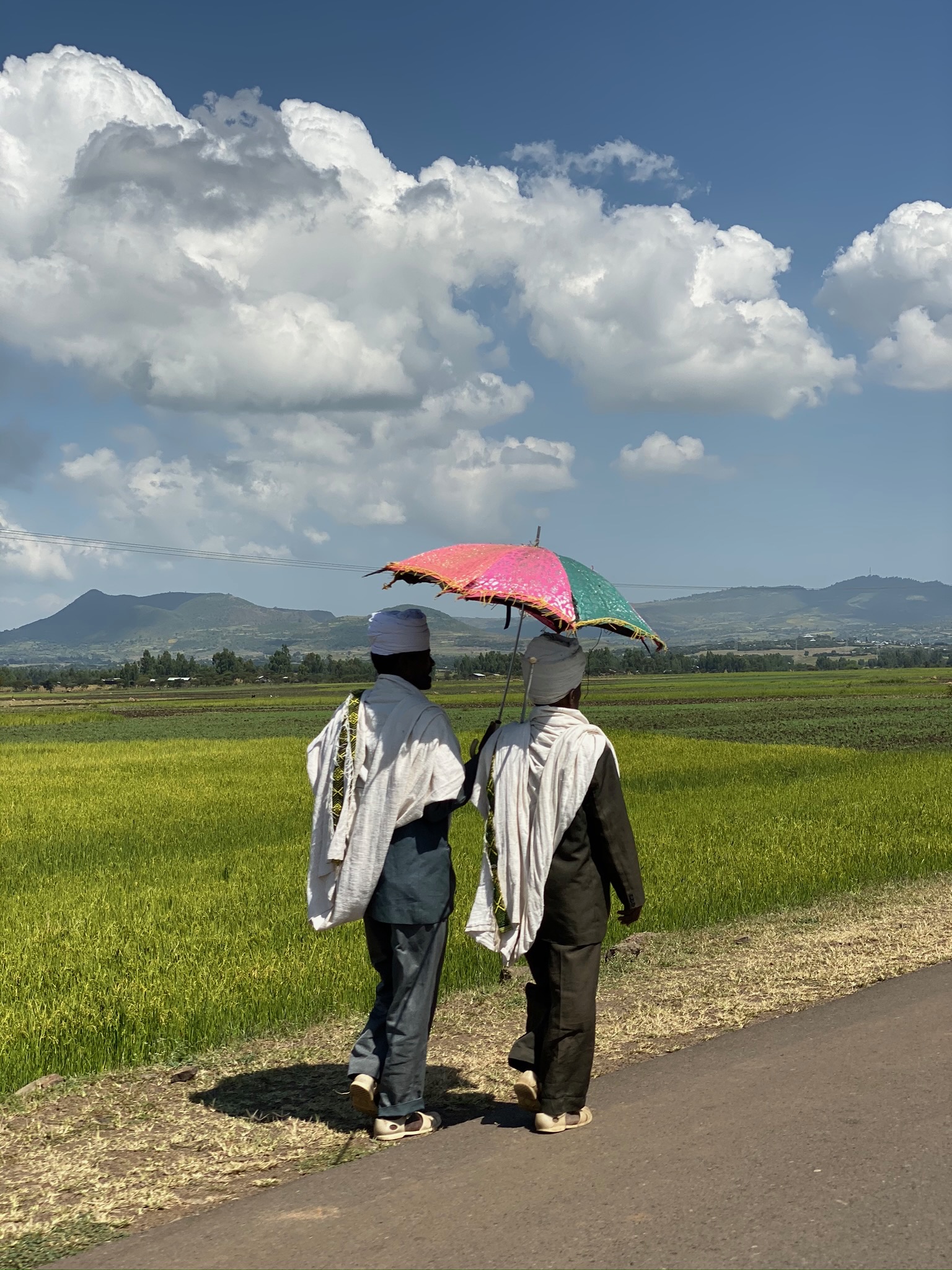
We offer a wide range of tours in Ethiopia all the way from North to South and East to West. If you are keen on mountains trekking, ancient history, or tribal culture, we are here for you. Click on one of the images below as we love you to explore more on what Ethiopia offers.
 Ethiopian Treks