
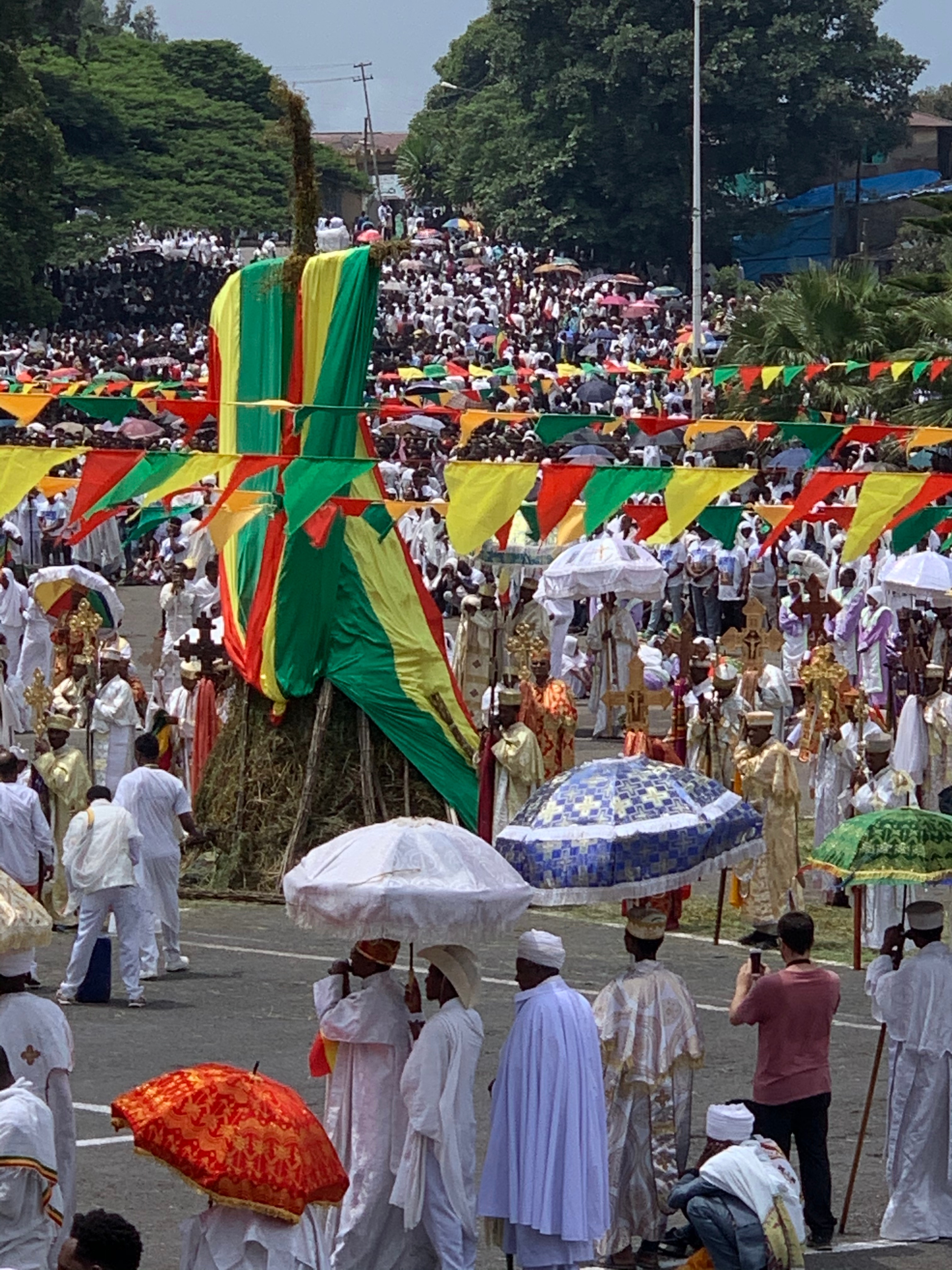
Our trekking in Lalibela helps you explore the eleven magnificent churches, although a small cave is currently being considered as a twelfth church. These churches are separated by a small stream that carries only rainwater and whose name, the Jordan (Yordanos), is immediately reminiscent of the Holy Land.
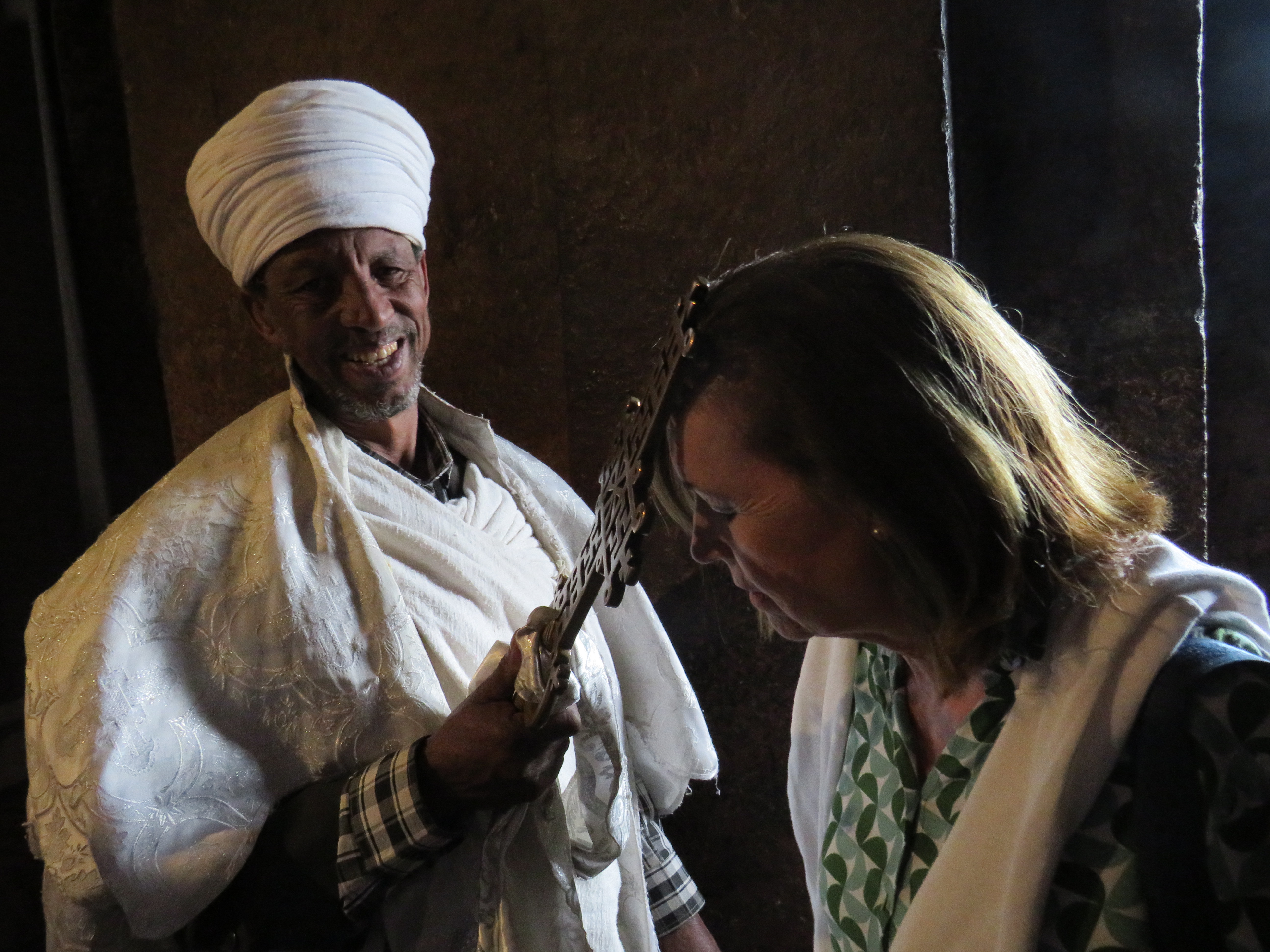
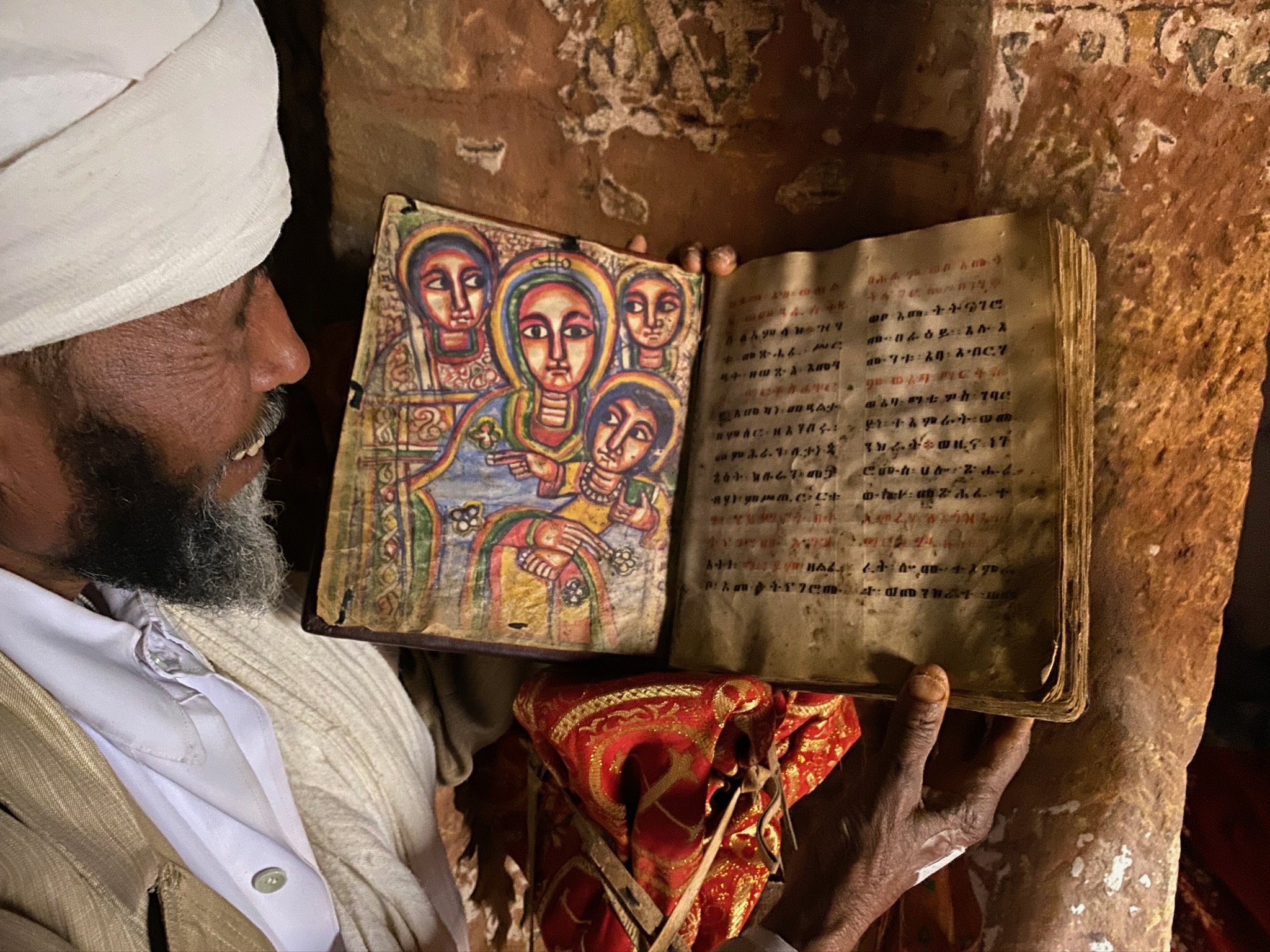
Lalibela’s art lies not only in the incredible monolithic constructions but also in the carefully-protected treasures housed within. The beauty of the processional crosses, manuscripts, canvases, icons, crowns and so forth form a wealth of artistic creativity.
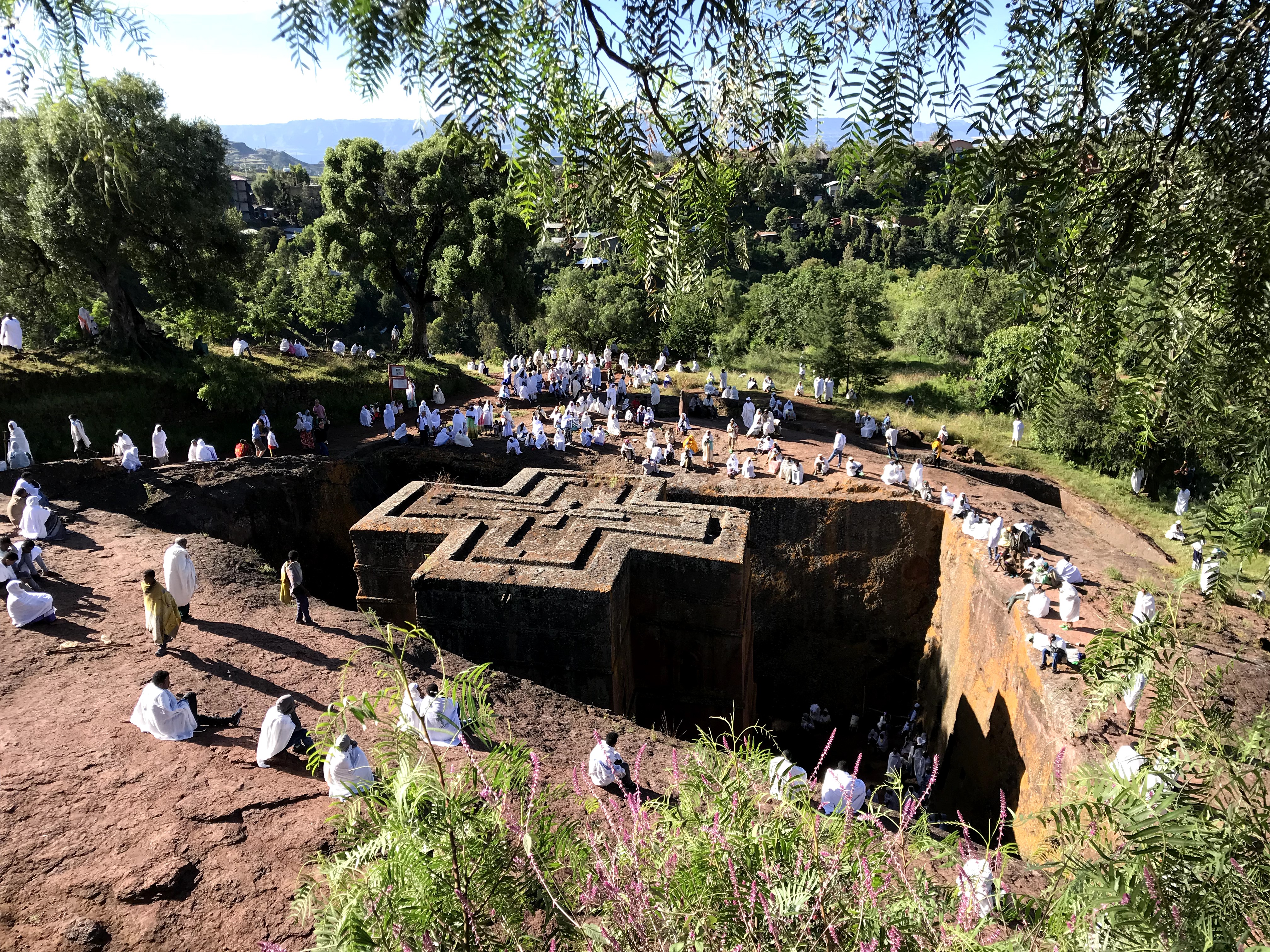
The Jordan separates the churches into two groups-six churches to the north and four to the south. The eleventh church is that of Saint George and is separated from both groups on the northern shore. A solid monolithic cross over the Jordan marks the beginning of the pilgrimage to the eleven churches.
The churches that make up the group north of the Jordan River, the Earthly Jerusalem, comprise: Beta Medhane Alem-The House of the Saviour of the World: Symbolising the tabernacle of the Covenant, this is Lalibela’s biggest church.
Admire this immense monolithic work reproducing a rectangular basilica with five naves. It has no interior decoration or paint. However, the exterior was once painted red according to the wishes of Empress Zauditu in the early 19th century.
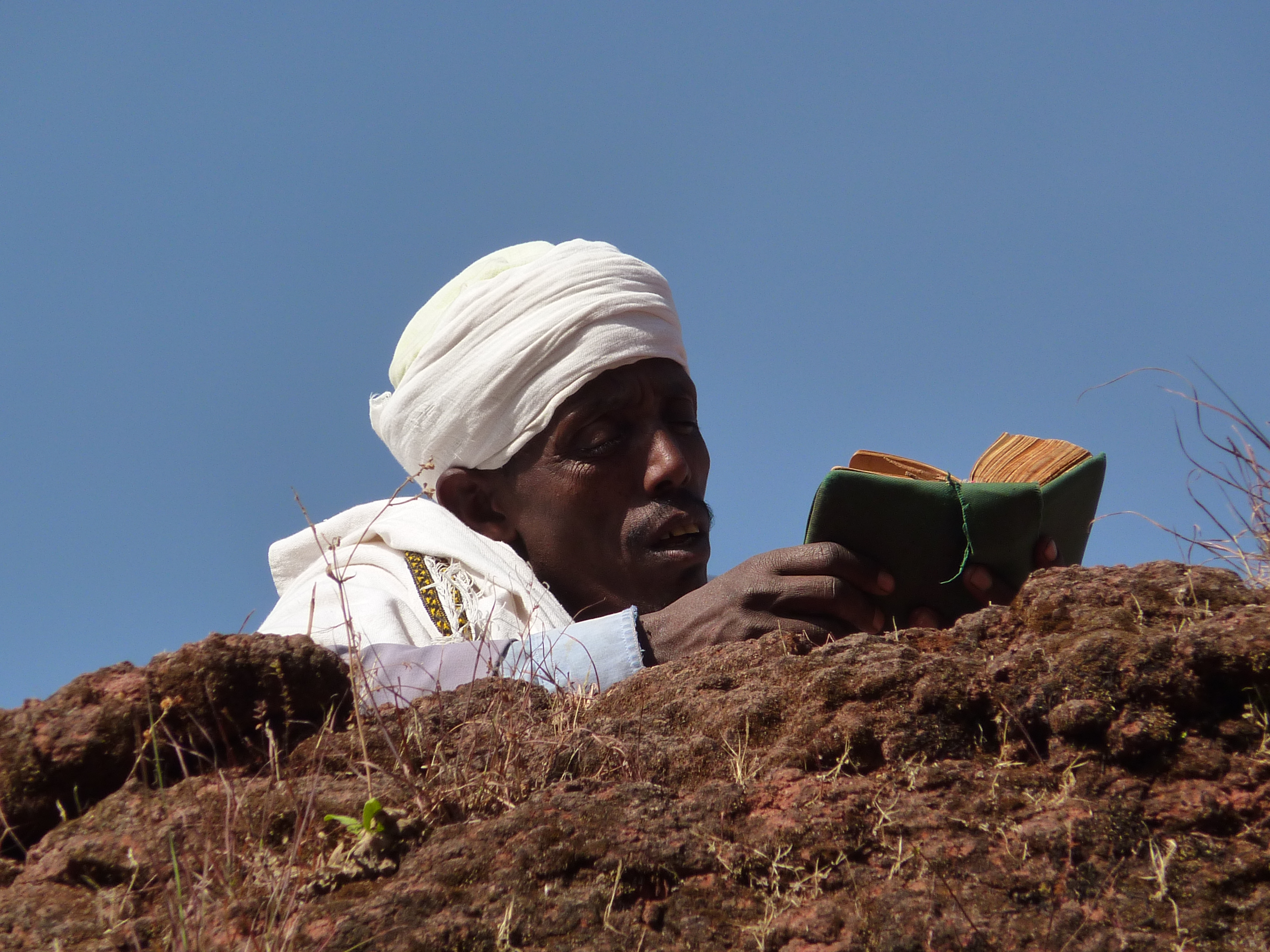
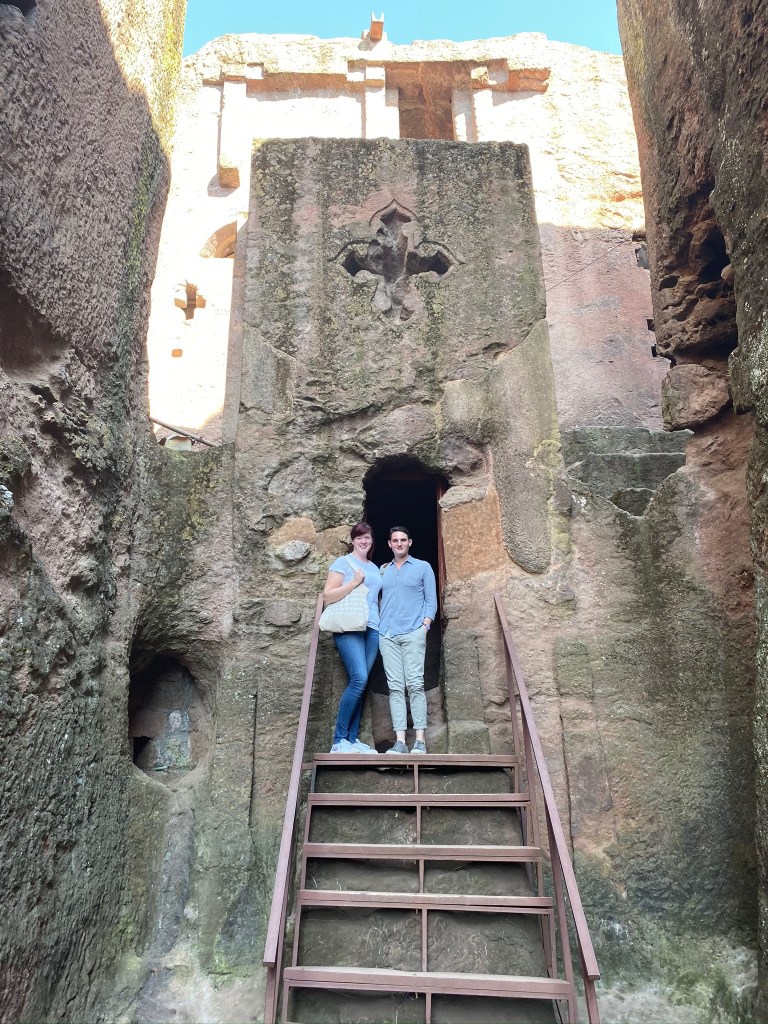
Explore the outside courtyard, several niches and small caves have been carved into the walls of the mountain from which the church emerges. Monks live in the caves, though in ancient times they were probably tombs. The monks, carrying small prayer books, are typically immersed in prayer and quite detached from the world.
Trek in Lalibela – Ethiopia, The Eighth Wonder Of The World
While in Lalibela you may wish to make tours to some of the other churches in the vicinity. Access to these churches often requires long walks and stiff climbs or rides by mule.
We would suggest a four-day tour to the churches of the Bilbala district, including the beautiful built-up cave church Yemrehanna Krestos, the tiny rock church Arbatu Entzessa.Bilbala Giorgis and in particular Bilbala Cherqos.
The last church of this tour would be Sarsana Mika’el. A visit to Gennata Maryam might be planned together with an excursion to Makina Medhane Alem.
Yemrehanna Krestos (Christ Show us the way)
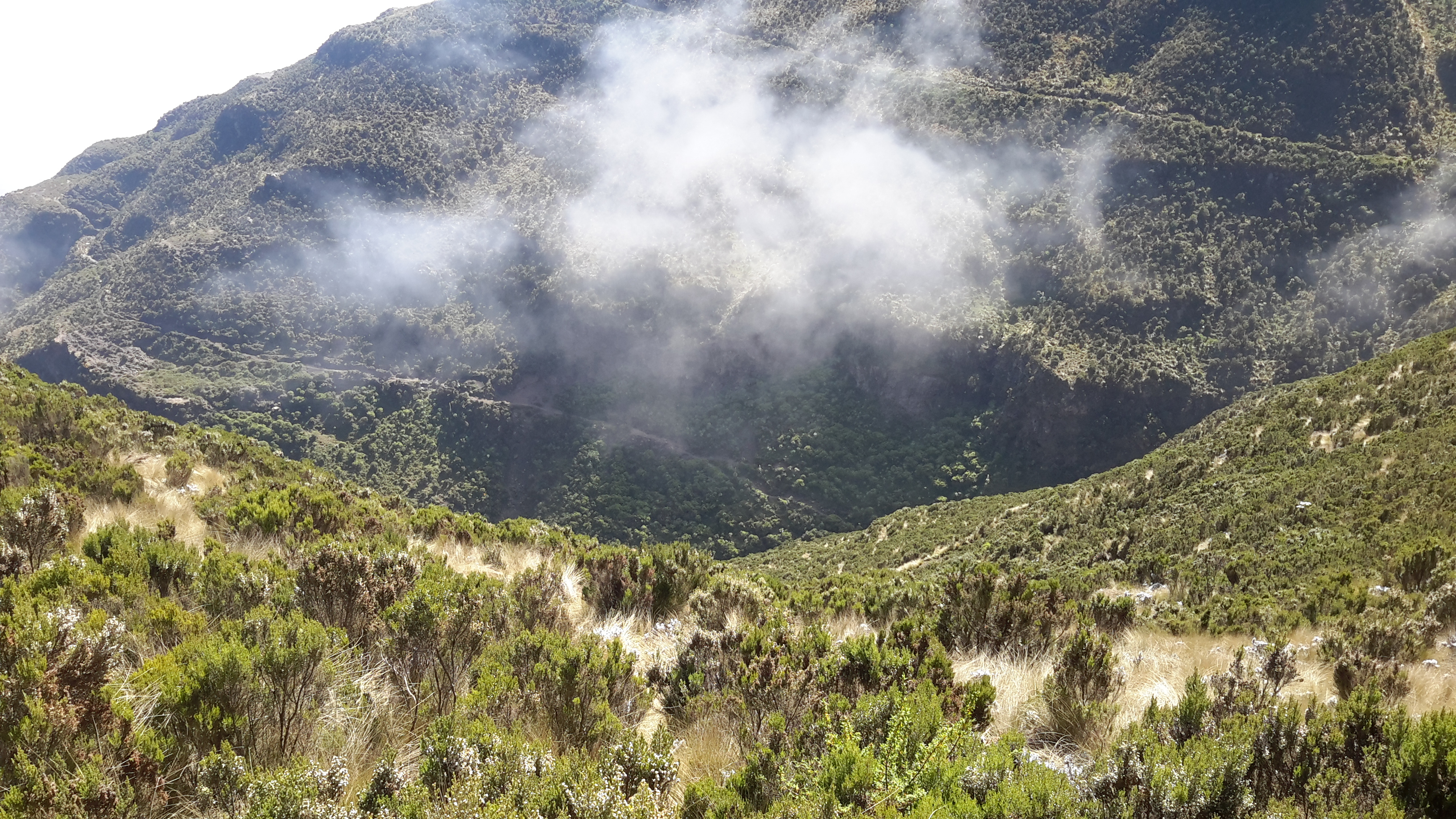
The church of Yemrehanna Kristos, Let Christ show us the way. This church is located in the mountains northeast of Lalibela. It was founded in the first half of the 12th century by Yemrehanna Kristos, a priest-king prior to King Lalibela.
This remarkable church is located six hours by foot to the northeast of Lalibela, on the mountain ridge the peak of which is Abuna Yosef. It is a built-up cave church in Axumite wood and stone construction.
The church has become famous for the decoration of its interior. The flat-span roof displays panelling richly adorned with geometrical designs. Note the beautiful coffer ceiling with inlaid hexagons and medallions with either figurative of geometric motifs.
Explore the eleven and more mysteriously built rock churches
Be impressed with great ancient architectures
Beta Merkorios and Beta Gabriel-Raphael
These two halls were probably used originally for lay purposes. It is believed that the palace of Lalibela was located on the second floor of Beta Merkorios. In addition, the church closely guards a wooden processional cross that tradition says was brought from Jerusalem by King Lalibela. Beta Abba Libanos, according to tradition, this monolithic church was carved in a single night by Lalibela’s wife Maskal Kebra and some angels.
Beta Giorgis, This impressive church is notable for several unique features. It is in the form of a Greck cross. Its excavation is an impressive 12 metres deep (40 feet) and three concentric Greek crosses are carved into its roof, which is at ground level.
Witness Lalibela the active spiritual centre
Beta Maskal
House of the Cross and Beta Danaghel-House of the Virgin Martyrs: These two church-caves are located on either side of Beta Maryam. The former has two naves with a very ancient wooden altar. The latter, which is smaller, is in memory of the virgins martyred during the reign of the Roman Emperor Julian.
Beta Debre Sina, House of Mount Sinai also known as Beta Mikael and Beta Golgotha-House of Golgotha: To symbolise the union between the Covenant of the Law given at Sinai and the new Covenant of Christ, redeeming us with his death at Golgotha, these churches are carved together. Beta Debre Sina is semi-monolithic and consists of three naves separated by cross-shaped pillars.
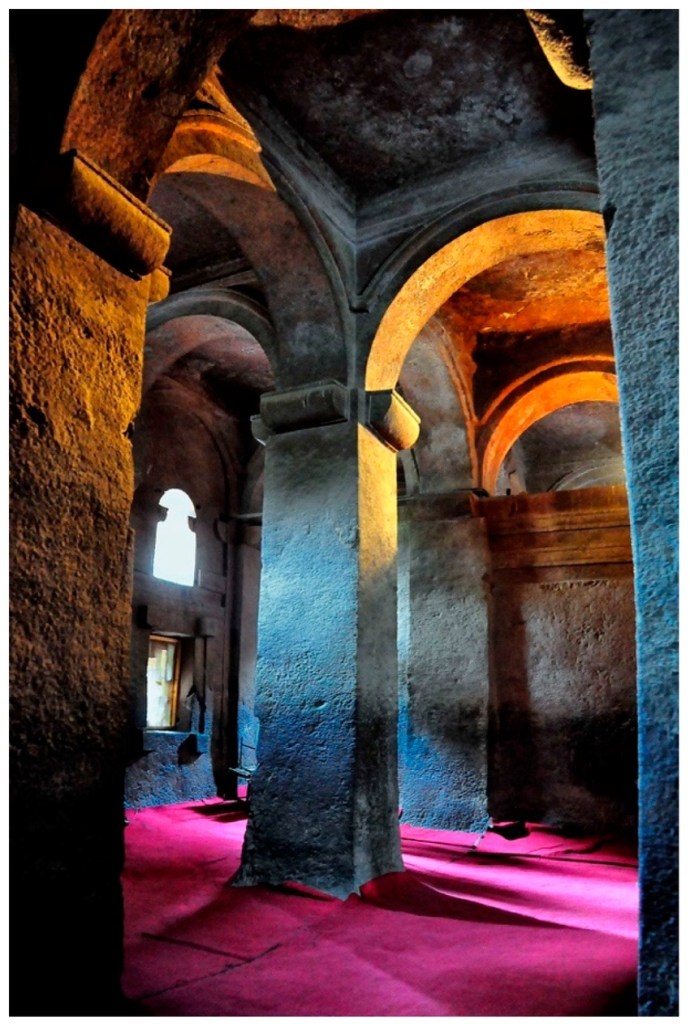
Marvel the interior frescos of Lalibela churches
Beta Maryam The House of Mary
This church, rich with interior frescoes and paintings, symbolises the garden of Gethsemane. Unique to Lalibela architecture, this church possesses a single central pillar.
According to one tradition, the Commandments are recorded on the pillar in three languages: Greek, Geez, and Sabaean.
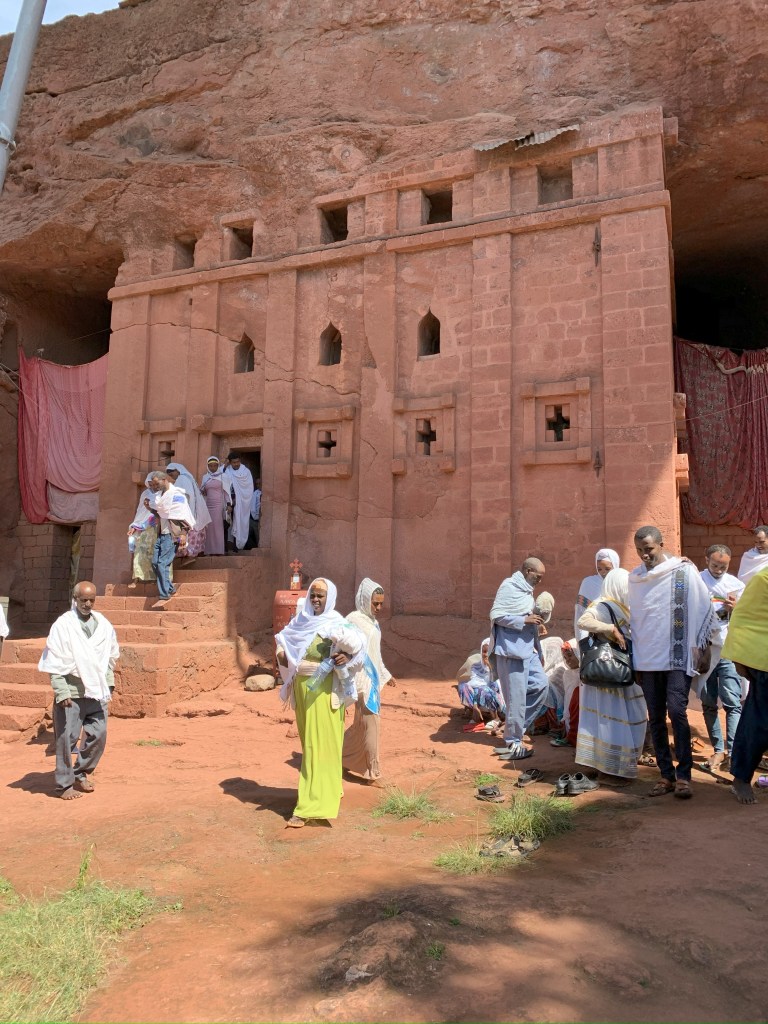
A cloth with a small image of the Virgin Mary in the centre completely veils the mystery of its contents. In the outside walls, different windows beautifully and simply form a whole series of crosses including Latin, Greek, Maltese and the Swastika. Some windows are blind and for decorative purposes alone showing only the cross on the exterior.
Ethiopian Treks To Lalibela Highlands
The ceiling over the sanctuary is domed and displays carvings and paintings. The founder of the church is said to have been King Yemrehanna Krestos, a predecessor of King Lalibela.
Arbatu Entzessa (The Four Beasts). This church can be reached from Yemrehanna Krestos proceeding to the southwest. This tiny monolithic sanctuary is detached from the surrounding rock on two sides.
It shows remains of old ornaments; pillars, capitals and doors are chiselled in Axumite style. The name suggests that the church is dedicated to the “four beasts”, symbols of the Four Evangelists following the vision of St. John. The Ethiopian synaxarium dedicates the 8th of Hedar (November)to these four beasts.
Bilbala Cherqos
Proceeding from Arbatu Erttzessa to the west you find Bilbala Giorgis, of which only the facade is visible. The other sides are surrounded by a tunnel; the roof. is not separated from the rock. A frieze with emblems of the vault of heaven decorates the facade. Legend says that holy bees live under the roof rock in niches.West of Bilbala Giorgis you find this semi-monolithic church, which,as a matter of fact, can be reached in the Bilbala district one day’s travel by mule to the northwest of Lalibela.
The church is properly orientated and has been worked from a piece tuff from east to west.The careful stone masonry on the facade is reminiscent of the facade of Bet Gabriel-Rufa’el, and the admirable murals depicting saints and the Evangelists in the interior are of particular interest to the visitor.
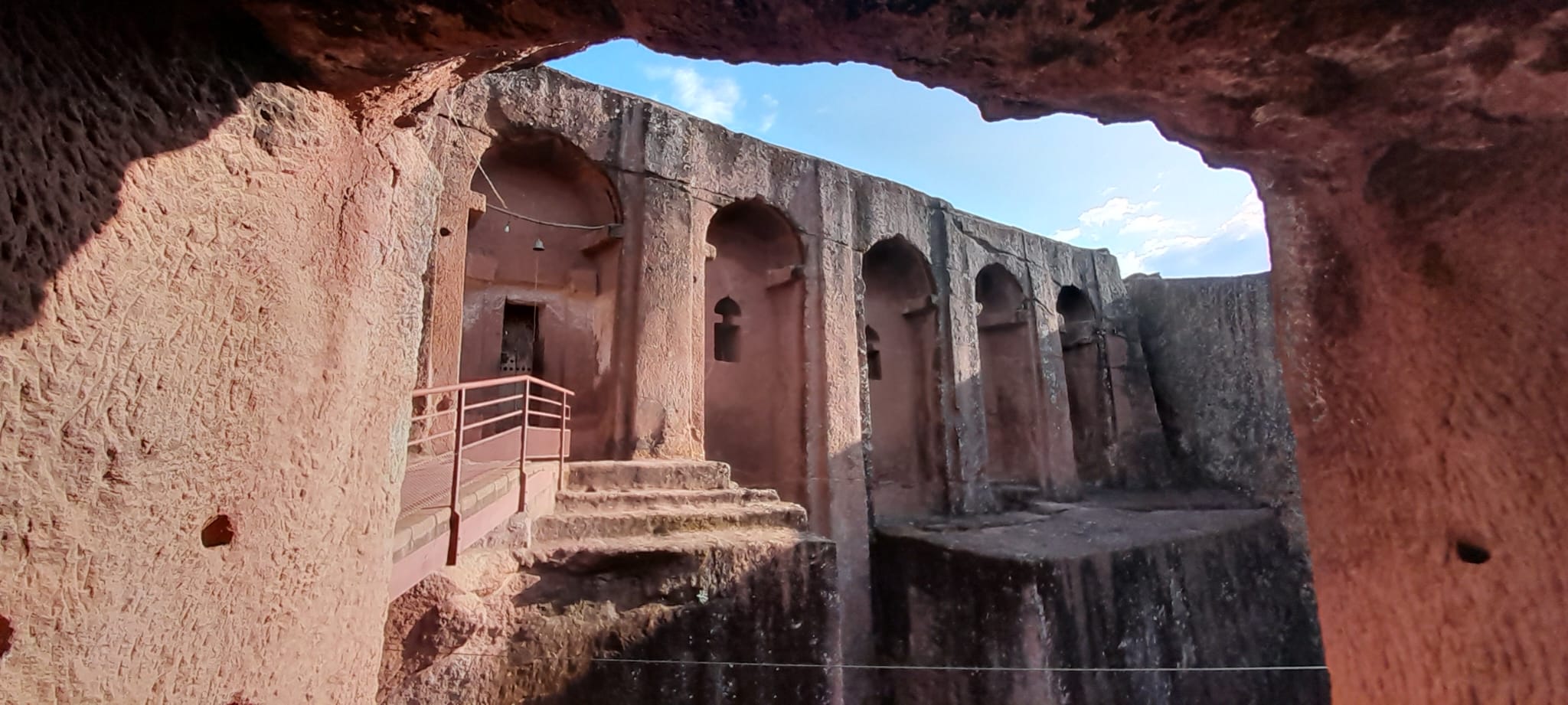
Trekking To Churches Out Side Of Lalibela
Sarsana Michael
The most western church of this tour is this tiny monolithic church, lying in a grove of euphorbia trees in the Sarsana plains and scarcely visible in its bed of rock. Through a passage you reach a deep trench running round the church.
Three sides are exposed revealing influences of the Axumite style. Next to a door the priests will show you a dark block of stone which is said to kill sinners on the spot once they touch it. Another legend is connected with the torrent nearby: a big snake is said to live there which has devoured four sinners during the last hundred years.
Makina Medhane Alem
Like Yemrehanna Krestos, Makina Medhane Alem is a built-up cave church in Axumite style. It is east of Lalibela, set in a huge gaping cavern on the eastern slopes of Makina, a spur of Abuna Yosef. You may reach it by two hours climb above Gennata Maryam (see below).
Although an example of Axumite wood and stone construction the church exhibits a unique modification: polished wall sections of levelled-off rubble between layers of dressed blocks of reddish tuff. The interior has rich painted decoration displaying geometric motifs as well as figurative ones.
You may admire the portrayals of saints as well as the sun and the moon symbols above the main entrance. A lovely littlepicture of fighting cocks next to the sun gives a glimpse into the interest of the painter for details.
Gennata Mariam
Gennata Maryam is near the 90-kilometre point on the track from Kobbo or Waldiya to Lalibela. It can be reached from Lalibela either by one hour’s drive or by four hours’ ride. Gennata Maryam is a true monolithic rock church on a high plinth.
This monolithic church has exterior columns similar to Greek temples and was probably built in the 13th century. Inside, there is a single central nave and two lateral wings. Its arches, column heads and part of its time worn walls still depict floral and geometric patterns and the remains of Biblical paintings. Art experts have classified it as a unique example of “archaic art”.
Unlike the Lalibela churches which are hidden in their pits this church is not surrounded by the walls of a trench; you may see it from far away-a block of pink tuff in the midst of green euphorbias and opuntias.
Like Medhane Alem it has a colon made of rectangular pillars. Note the fine reliefs of Latin crosses in blind arcades on the top of the pitched roof. In the interior the rich painting displays a style which might be described as “archaic”.
Authorities claim that they originate from the thirteenth century, the probable period of creation for that church. The range of colours is limited: brown, ochre, green and a shining light blue. Motifs include saints from the Coptic synaxarion as well as angels, the sun and the moon and crosses of various shapes that we find so often in this area.
Naakuto Laab (a later ruler than Lalibela)
The church of Naakuto Laab (a later ruler than Lalibela) is a church-cave with rich interior decoration and objects of major artistic value. Its crowns, manuscripts, icons, crosses and so forth are solemnly placed on the grass for viewing.
Treks To Southern Lalibela
Trek through southern Lalibela, churches and villages. Marvel at the
amazing Werkaye Mariam, Mequat Mariam, Atrow, or to Abuna Yoseph and Hudad among others. The trekking project also benefits the local communities with the trekking and accommodation facilities.
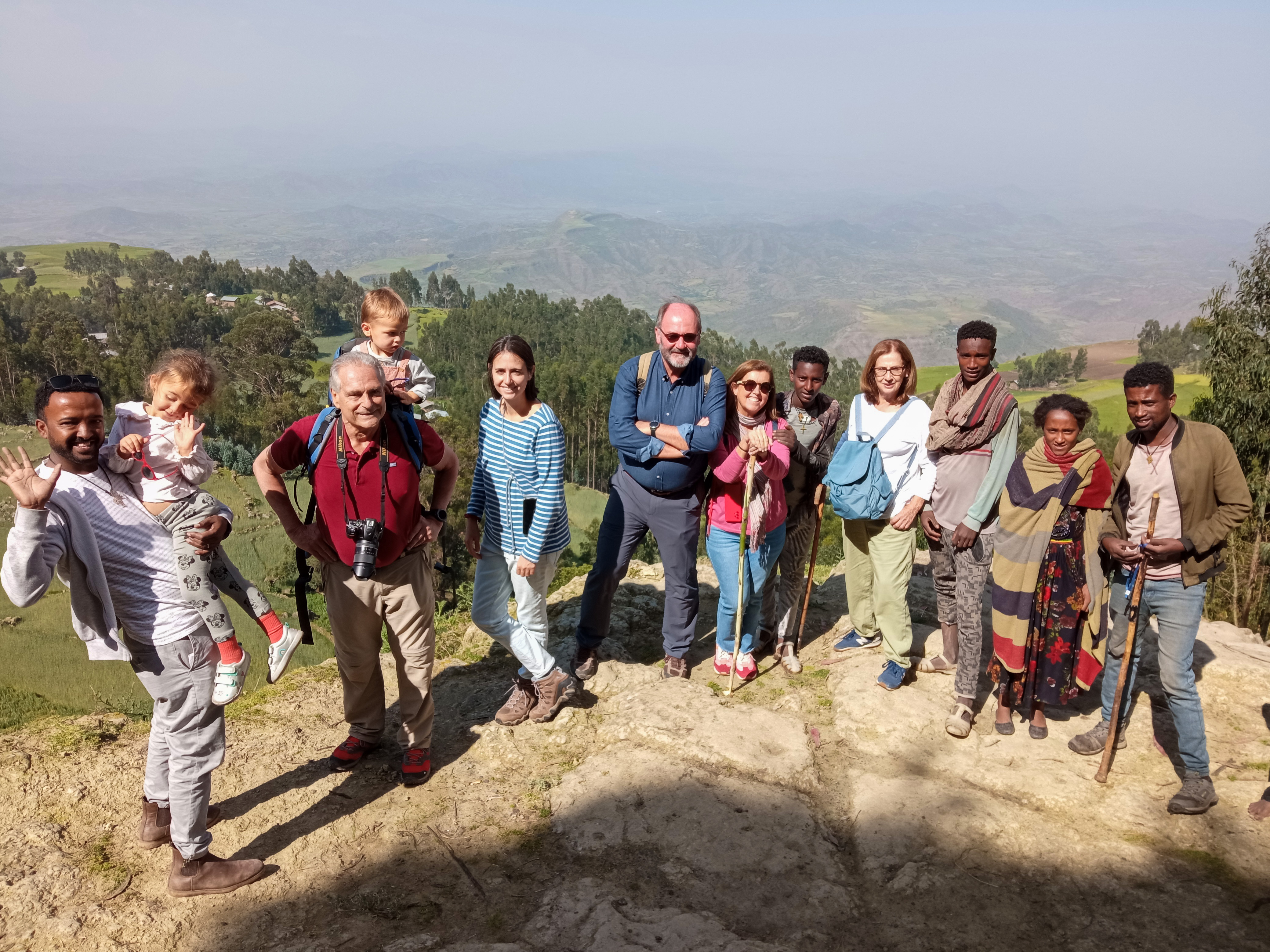
Visitors typically do three to five days trekking, staying three or four nights in the community run accommodations having tasty meals cooked by the local villagers and watching the sunset over the mountains. This will be the highlight of your trip.
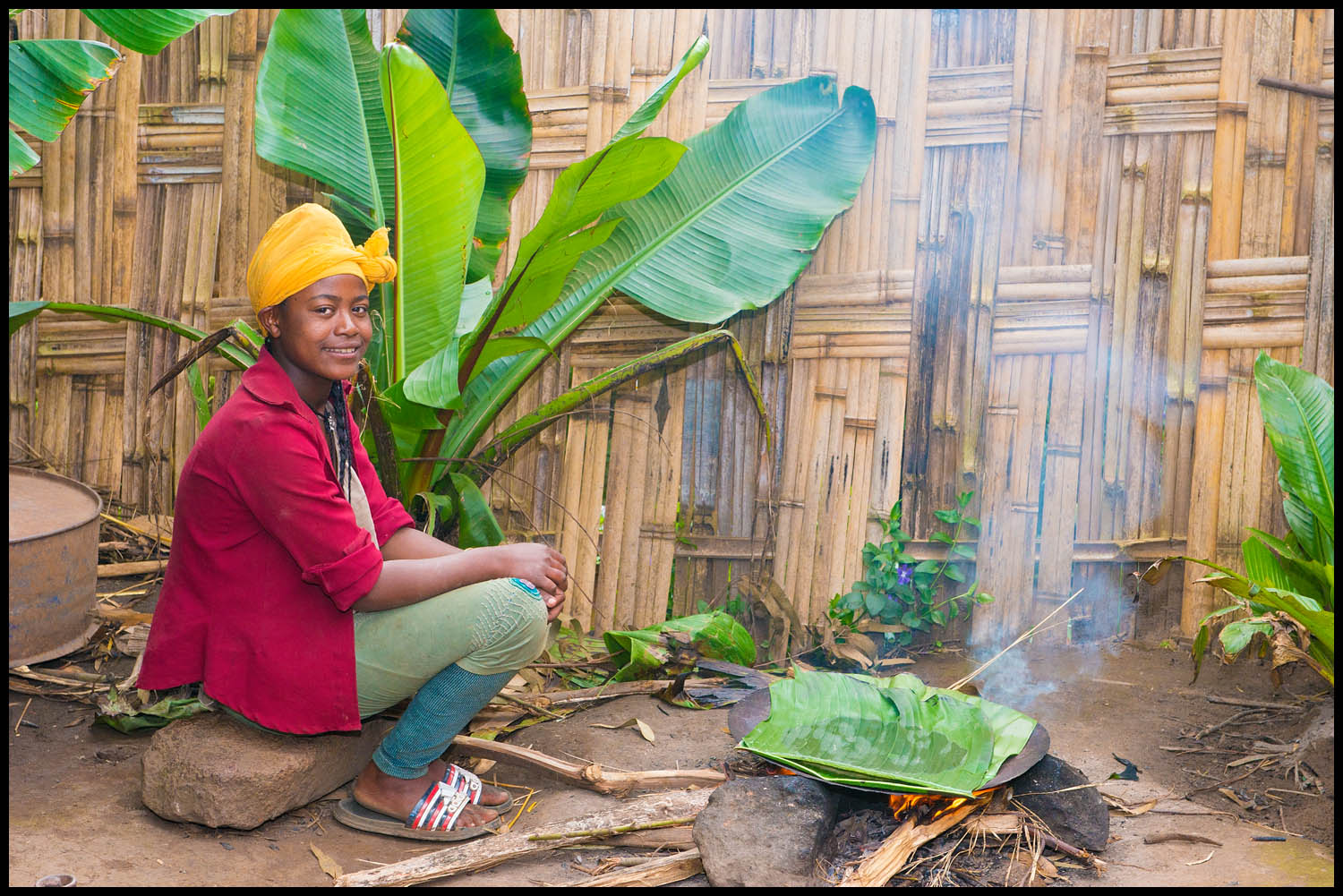
Enjoy the coffee ceremony chatting with the local people, a drink at sunset watching the world from a cliff. Simple but tasty food is served for breakfast and dinner in a cosy restaurant tukul, a picnic lunch is also provided for the trail.
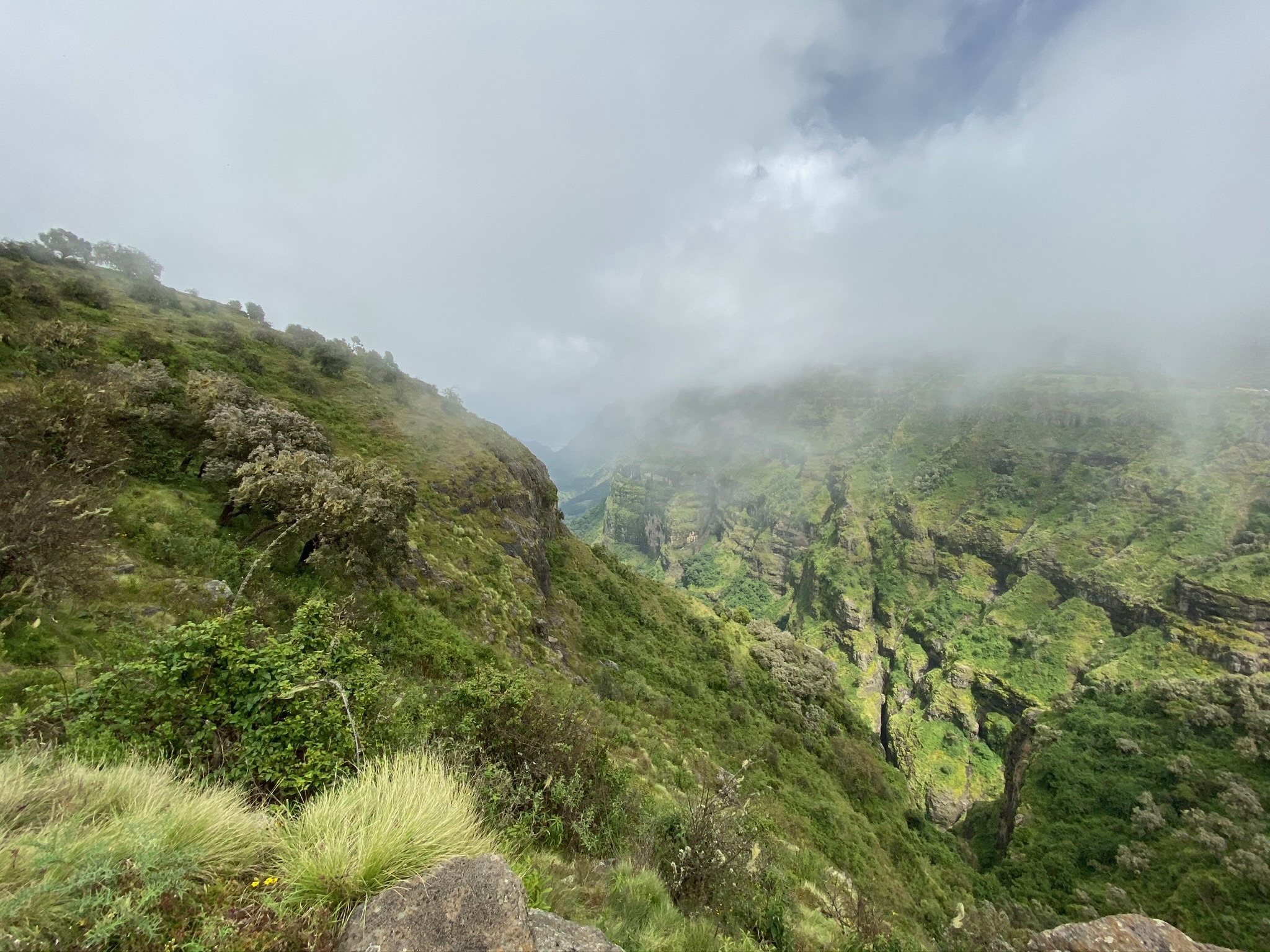
You will walk 5-6 hours each day and stay in huts built and maintained by local villagers who also prepare your meals. Injera with (stew), lentils or chick peas. The terrain is largely level and follows the escarpment.

What Our Guests Said About Ethiopian Trekking to Lalibela
Bharati Dubey
“Wonderful, amazing, thought provoking, mind changing.
Thanks once again. I had a wonderful trip , though time was short. I want to see more of Ethiopia in future. Kisdis and Isu were very helpful.”
Sheena Burnes
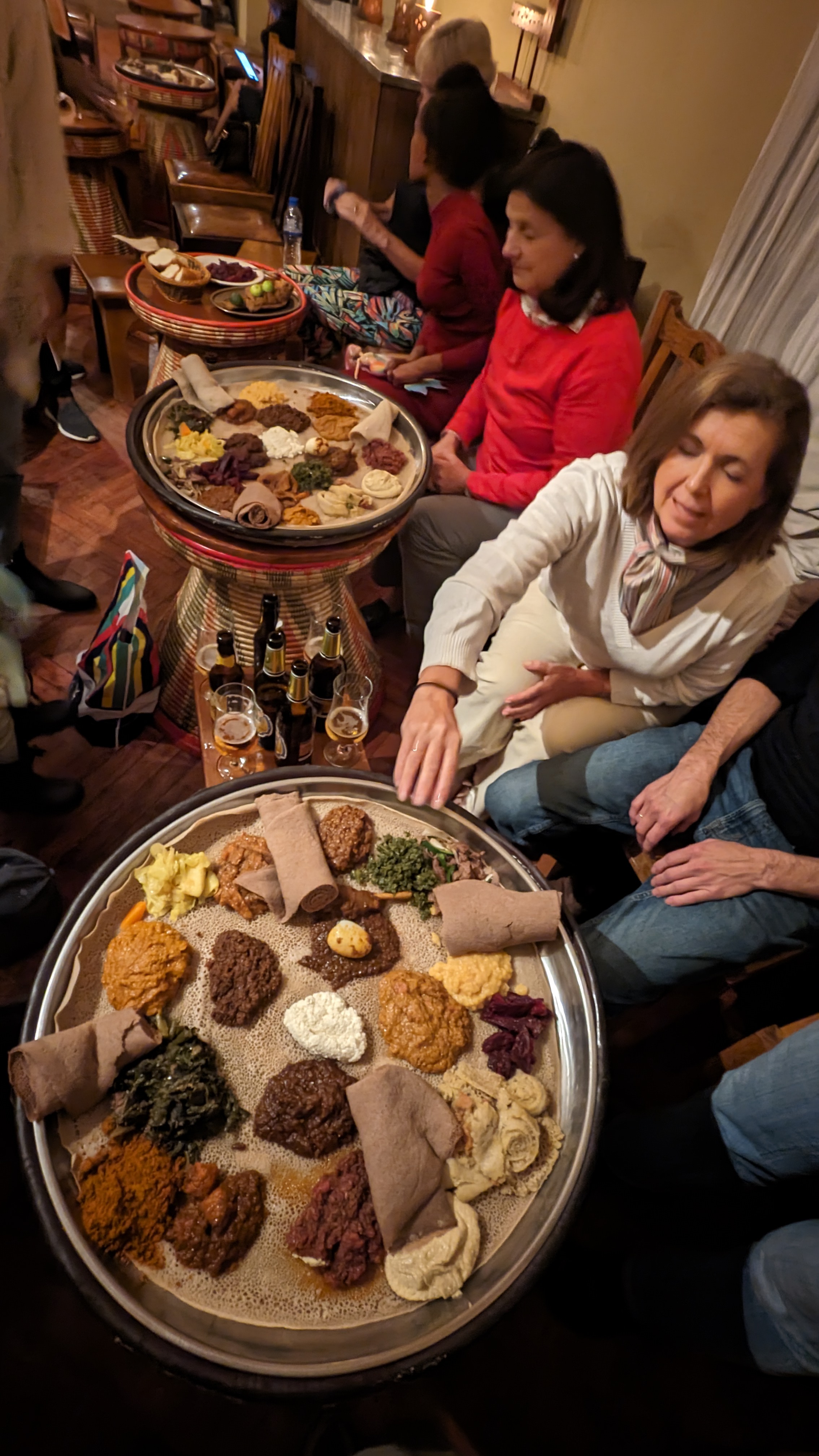
“Very enlightening. Ethiopia has a very rich culture. We loved the Gelada monkeys in Simien Mountains the very best. Other highlights were having a fruit layered drink with Eskinder, eating injera with lots of different dishes at Ben Ababa restaurant in Lalibela and the spectacular high altitude views.”
More Interesting Facts About Ethiopia Lalibela Treks
At first the altitude might slow you but after a while you will become acclimatized. Good walking shoes or boots are safer and more comfortable for the uneven rocky ground, particularly the descent to Yadukulay Tukul camp. After breakfast you will meet your
reputable trekking guides who are well experienced around the mountains and know about cultural tours. They have much knowledge of plantation and birds and will meet you at the lodge with donkeys, porters and a cook. The trek is to one of the highest mountains called
Hudad, and the area around Lalibela.
You will see unique flora and fauna and there is an interesting village to experience community life, with a lesson of making injera, cooking and other activities. The first day will be 6 hours of trekking if starting from the Laliblela Lodge. It is possible to drive some of the way and then start 4 to 5 hours of trekking. Along the way you can stop at different locations for taking pictures and a takeaway lunch will be served at a convenient village.
Wake up early to watch the sunrise and have breakfast. Then proceed trekking for 5 to 6 hours to the third highest mountain of Abune Yosef. After a lunchbreak, visit the monastery of Abune Yosef, the baboons and red fox. After breakfast trek through endemic flora and fauna such as giant lobilia and a spectacular landscape. This day will be 5 to 6 hours trekking to Yimrehane Kirstos where you will visit the 10th century monastery.
We Like To Hear From You


More Ethiopian Treks For You
We offer a wide range of tours in Ethiopia all the way from North to South and East to West. If you are keen on mountains trekking, ancient history, or tribal culture, we are here for you. Click on one of the images below as we love you to explore more on what Ethiopia offers.


 Ethiopian Treks