
Join Our Adventure to Tigray and Danakil Depression
Our Ethiopian Trekking to Tigrai and the Danakil Depression takes you to the home of ancient civilization, Yeha, one of the most ancient architectural sites that exhibits a huge stone temple of the pre Axumite period. Moreover, the Axumites have also left behind some of its rarest and astonishing historic and architectural achievements in the world.
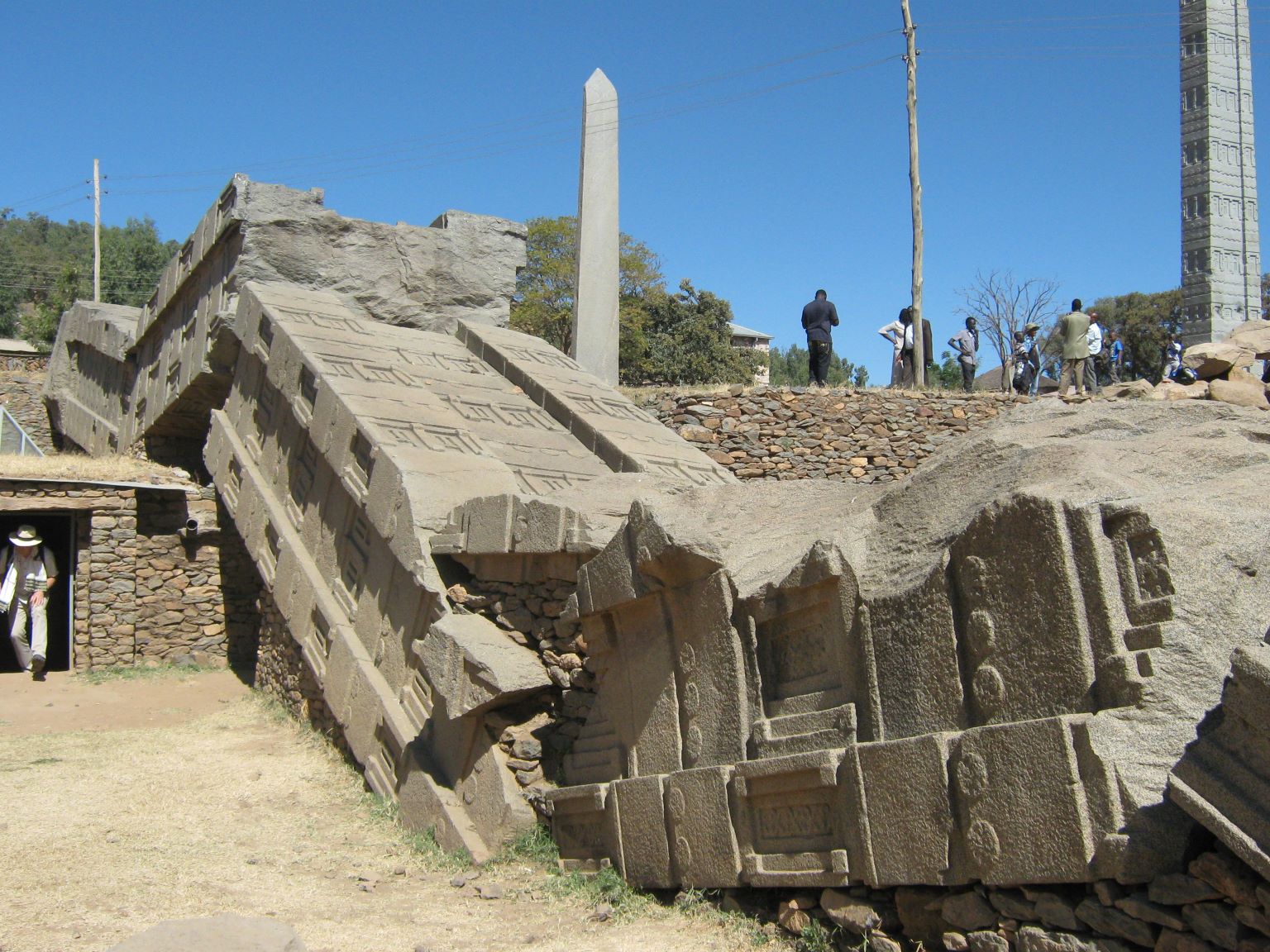
Axum’s unearthed palaces, dressed stele with underground tombs of finely and geometrically placed blocks and monuments, manifest the great artistic talent of the period.
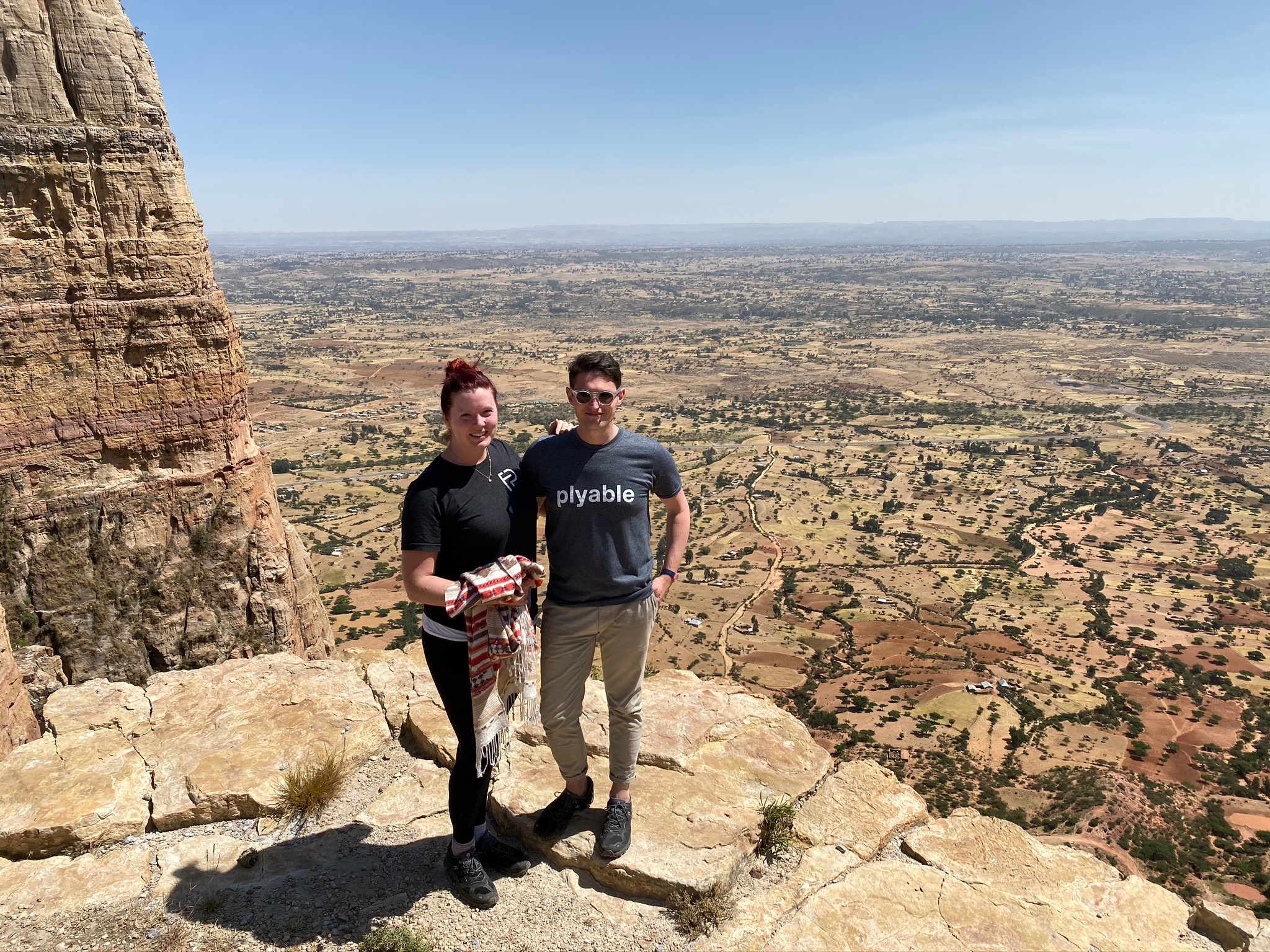
Exploring the ancient rock churches of Tigray offers a unique glimpse into Ethiopia’s rich Christian heritage and architectural genius. Each church tells a story of faith, history, and artistry, inviting visitors to appreciate the wonders of this extraordinary region.
The rock churches of Tigray are not only remarkable for their construction but also for the rich history they embody. They are a testament to the early Christian heritage of Ethiopia, preserving religious traditions and architectural styles that have persisted for centuries.
The Danakil depression is located in Northern Ethiopia, in the Afar region. It is known as the ‘hottest place on earth’ but that title does the place so much injustice. The Danakil region is so much more than how high the temperature gets – it’s unique geological features are the ones that draw visitors to visit despite the many hours of off road driving, and barebones accommodation. Plus, the whole area is the birth place of man kind.
A trip to the Danakil Depression is without a doubt, the absolute highlight of Ethiopia.

Expedition of the Holy Ancient Sites of Tigray
Tigray or sometimes spelled Tigrai, a region in northern Ethiopia, is home to over 120 ancient rock-hewn churches that show case breathtaking architecture and historical significance. These churches, which are primarily carved into cliff faces and rocky outcrops, date as far back as the 4th century, coinciding with the arrival of Christianity in Ethiopia, though most date from between the 6th and 14th centuries.
The construction of these churches is shrouded in legend. It is said that the phenomenal architectural feats achieved in their creation were beyond the capacity of human skill, with accounts of divine assistance from angels sent by God. This belief adds a layer of reverence to these already awe-inspiring sites.
Notable Tigrai Churches to Visit
- Abreha We Atsbeha: This church is one of the oldest rock-hewn churches in Tigray, featuring intricate frescoes and remarkable architectural details.
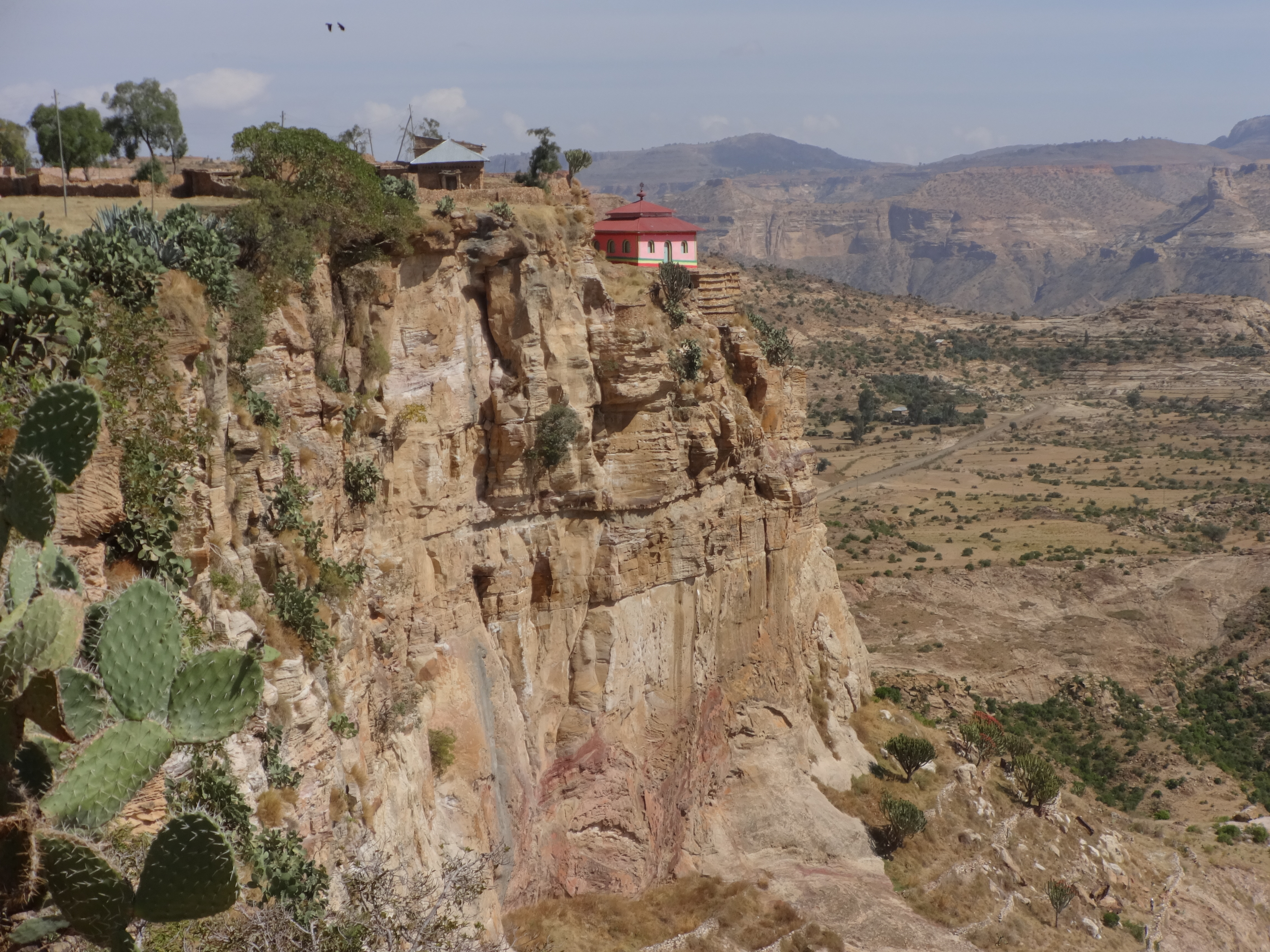
- Debre Damo: Located atop a mountain, this church is accessible only by a rope, which adds to its mystique and seclusion.
- St. Mary of Zion: Though primarily known for its connection to the Ark of the Covenant, its architecture and historical importance are equally captivating.
- Michael Imberri: This church showcases unique architectural elements and is noted for its beautiful surroundings.
- Ghirgsa: Less known but equally magnificent, Ghirgsa offers a peaceful retreat for those exploring the Tigray region.
Ethiopian Journey Through Ancient Civilizations and Unique Landscapes
Ethiopia, the home of ancient civilizations, boasts historical treasures that captivate visitors. One of the most significant architectural sites is Yeha, known for its monumental stone temple dating back to the pre-Axumite period. This site offers a glimpse into the remarkable engineering skills of early Ethiopian civilization.
The Axumite civilization further advanced architectural marvels, leaving behind some of the world’s rarest historical and artistic achievements. Axum’s excavated palaces, intricately decorated stelae, and underground tombs constructed from precisely cut blocks showcase the extraordinary artistic talent of this period. Each monument stands as a testament to the sophistication and cultural richness of the Axumites.
In the Northern region of Ethiopia lies the Danakil Depression, often referred to as the ‘hottest place on earth.’ However, this title barely scratches the surface of what the region has to offer. The Danakil’s unique geological features—including colorful hot springs, volcanic craters, and salt flats—draw visitors eager to experience its breathtaking landscapes. Despite the challenging conditions, including hours of off-road driving and basic accommodations, many travelers find the journey well worth it, as this area is also considered the birthplace of mankind.
A trip to the Danakil Depression undoubtedly stands out as the pinnacle of experiencing Ethiopia’s diverse natural wonders and rich history.

Ethiopian Trekking In Axum And Danakil
After a morning breakfast, visit Axum, Recognized as a World Heritage Site by UNESCO in 1980, Axum is a testament to the rich and glorious past of the mighty Kingdom of Axum (2nd C. BC 700 A.D.).
Explore the famous Stelae field with its Axumite stelae in various sizes and shapes. The
archaeological museum is nearby and it offers an opportunity to bring context to relics on view. Also visit the Kaleb and Gebremeskel tombs, dating to the 6th century A.D and on the way to town, the Ezana inscription (Ethiopia’s Rosetta stone) is worth visiting.
Tradition has it that the Ark of the Covenant was brought to Ethiopia in the 10th century BC by Menelik I and later Ethiopian kings and emperors would proclaim their legitimacy to rule by their lineage to.
Proceed driving to the churches of Chiksilassie and Kidane Mihret which are found in the village of Agbe. These churches are special because it is said to be one of the best monastic place in the area and the location by itself is situated somewhere in forest and
running water all year round.
The churches are said to be one of the places where you will find precious church treasures. Later, drive to botanical garden of May Lomin. My Lomin is an ideal place for relaxation and the garden is rich in indigenous trees and birds as well.
Ethiopian Treks At Dallol Salt Lakes
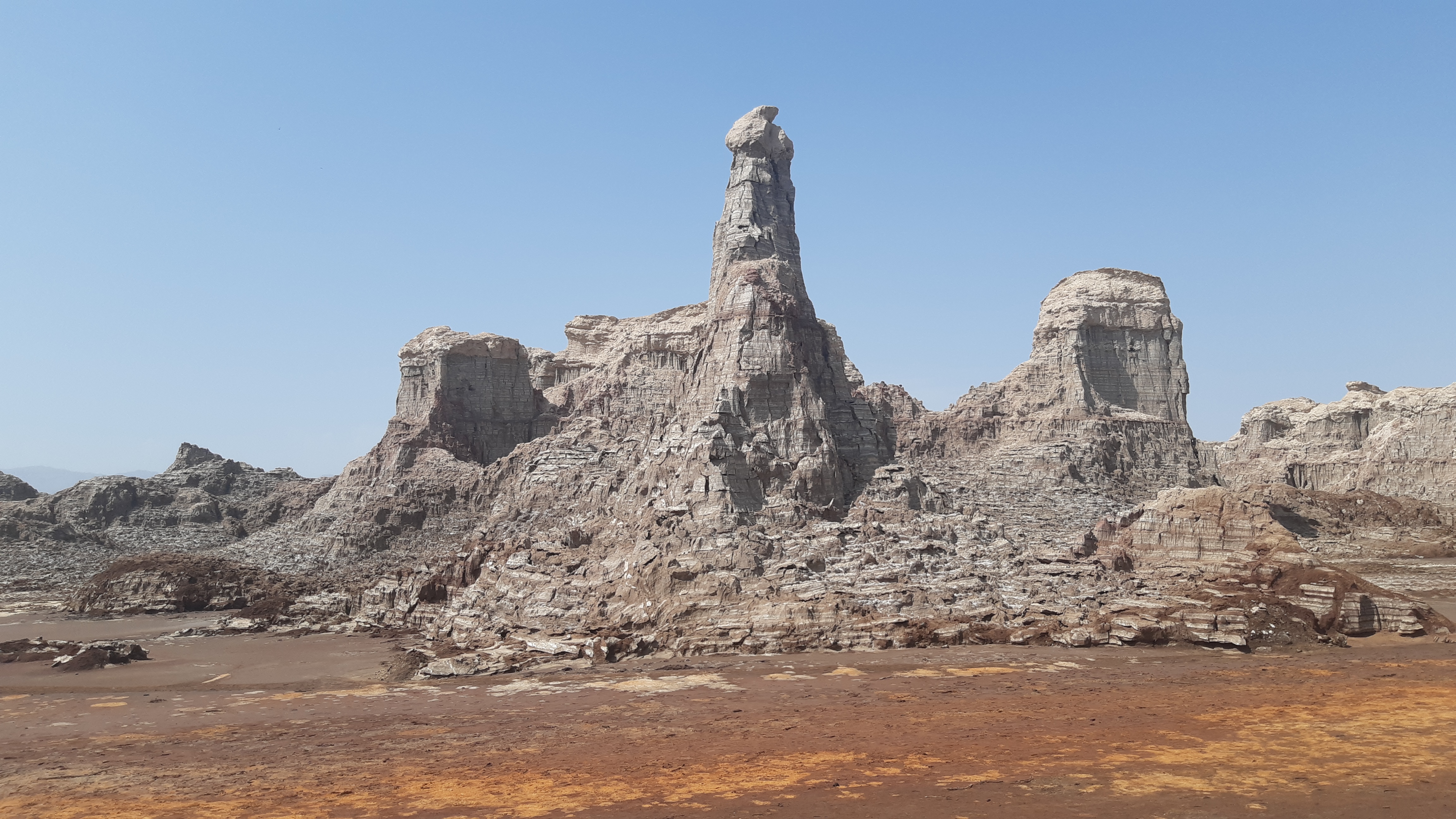
Drive to Hamedela via Berhale. The Danakil Depression can be said to ‘begin’ here. It is one of the most inhospitable regions of the world, but is nonetheless spectacular, full of eye-catching colors, as in the sulphur springs.
Early morning you will rise with the sun with time to walk around pits and craters. The main pit-crater, 200 m deep and 350 m across, is sub-circular and three storied. The smaller southern pit is 65 m wide and about 100 m deep.
The desert has several points lying more than 100 meters (328 ft) below sea level. You pass through a small town of Berhale where the camel caravans stop before they proceed to the northern highlands.
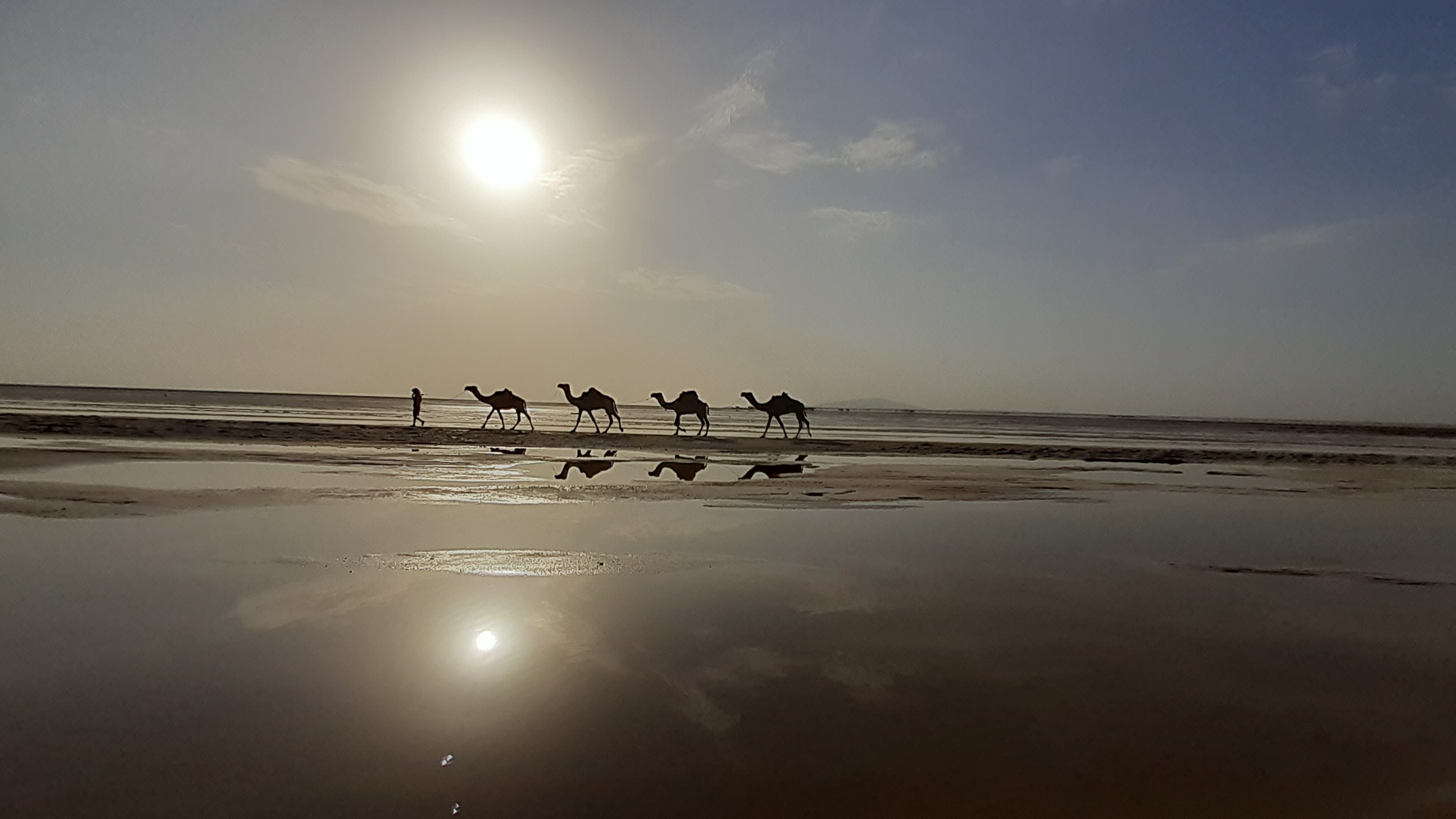
En route you see many long caravans going to the salt mines and others coming out of the Danakil with their salt loaded camels. (3-4 hrs drive) Camp at Hamedela. You pass several small hamlets scattered here and there in this desert land, before reaching Dodom. You will trek from Dodom to Erta Ale which takes about 3 hrs.
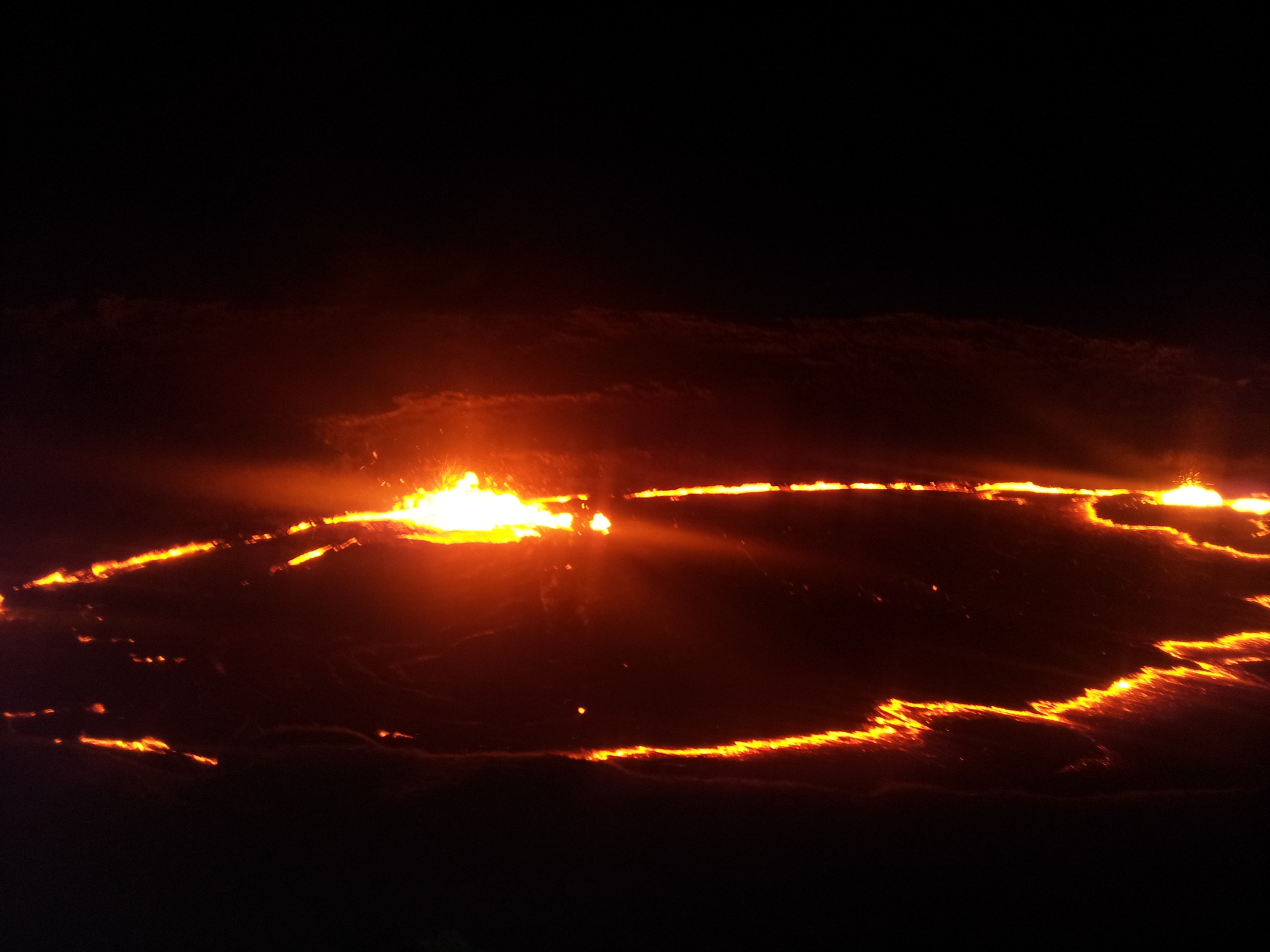
Camels transport all the camping materials and some food, sleeping materials, mattresses and water, to the rim of the volcano, where we spend the night watching the dramatic action of the boiling lava.

Ethiopian Treks To Erta Ale Lava Lake
Erta Ale ranks one of the most alluring and physically challenging natural attractions anywhere in Ethiopia. It is a shield volcano with a base diameter of 30 km and 1km square caldera at its summit. Erta Ale contains the world’s only permanent lava lake and you will spend an unforgettable night on the top of the mountain.
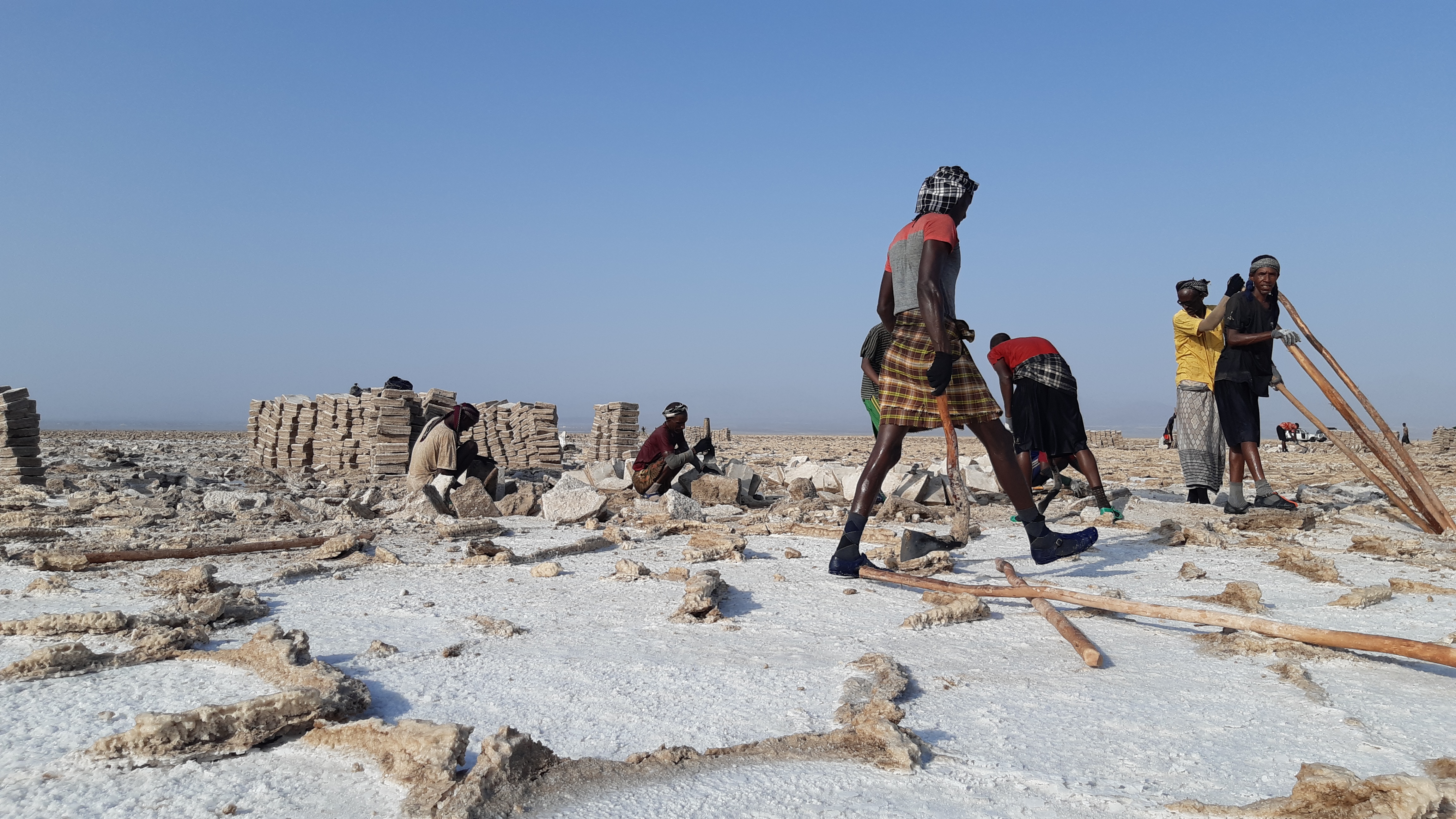
Morning driving tour to Ragad (Asebo), the place where the salts are mined. Observe the breaking of the salt from the ground, cutting into rectangular pieces and loading on camels. You drive ahead to Dallol and visit the difference landscape formed by volcanic activity, Dallol + Lake Assal + camel caravans.
Excursion to Dallol (116 meter below sea level, one of the lowest places in the world) colorful salts mining, visit Lake Assal, follow up camel caravans and walk with the Afar people. Drive back to Hamedela and proceed to Gheralta.
En route visit Mikael Imba which is of similar design as Abraha Atsbeha and Wukro Cherkos. With an interior area of 140 square meters, the church is perhaps the most spacious of all the rock churches in Tigrai. The top of the pillars are graced with stepped capitals, the ceiling is meticulously decorated with intricate patterns. Incised in relief, a large Greek cross adorns the ceiling. In terms of decoration and finishing, Mikael Imba is “an artistically finished church.”
Treks At Tigrai Highlands and Ancient Churches
After a morning breakfast, drive to Medhane Alem (Saviour of the world). The church can be reached through a combination of asphalt and dirt roads through Freweyni via Hawzein. To access the church you climb a slope of exposed sandstone. It is covered with potholes which local people believe to be the hoof prints of St. George’s horse.
This church is one of Tigrai’s oldest and finest rock-hewn churches. Its exterior and interior walls are roughly hewn, which only makes the elaborately carved coffered ceiling much more special. It is quite possibly the oldest rock-hewn church in Tigrai, or anywhere in Ethiopia.
Take a lunch break at Adigrat and proceed to Debre Damo. Damo monastery is situated on an isolated mountain in northern part of Tigray. It is unique compared with most Ethiopian monasteries.
Debre Damo was built, in the sixth century AD, with curved wood panels, painted ceilings and walls dedicated to the legend of Saint (Abune) Aregawi. The history of Debre Damo is centred on the “Nine Saints” who came to Ethiopia from Syria to spread Christianity in the Tigray region. One of them was Saint Aregawi who settled on the mountain of Debre Damo.
Debre Damo is magnificent in terms of its location and extensive collection of priceless manuscripts that have remained intact to today. It has become a prominent monastic and educational centre for the Ethiopian Orthodox Tewahedo church.
Debre Damo is only accessible by climbing up by a rope, which is made of “plaited leather”, lowered from the cliffs, which visitors tie around their waist and are then pulled up by a monk at the top of the cliffs. It is only accessible to men and male animals. Women and even female animals are forbidden to set a foot into the monastery, and must remain under the cliffs and pray from there.
Visit Yeha. This city was founded at least 2,800 years ago and served as the capital of a pre-Axumite empire. The well-preserved stone temple was built 2,500 years ago. It also served as a center of a monastic Christian community in the early 6th century. A modern church built next to the temple ruins contains some of the ancient temple stones and its treasury contains illuminated manuscripts and crowns. En route to Axum through the dramatic highland landscapes of Adwa where the Battle of Adwa(1896) took place which is a land mark to the Black World is in your attention.
After an early morning breakfast visit Axum, recognized as a World Heritage Site by UNESCO in 1980, Axum is a testament to the rich and glorious past of the mighty Kingdom of Axum (2nd C. BC 700 A.D.). This morning the visit will start with the famous Stelae field with its Axumite stelae in various sizes and shapes.
The archaeological museum is nearby and it offers an opportunity to bring context to relics on view today. In the afternoon, you will visit the Kaleb and Gebremeskel tombs, dating to the 6th century A.D and on the way to town, the Ezana inscription (Ethiopia’s Rosetta stone) is worth visiting.
Desert Trekking And Camel Caravans
The Danakil Depression can be said to ‘begin’ here. It is one of the most inhospitable regions of the world, but is nonetheless spectacular, full of eye-catching colors, as in the sulphur springs.
The desert has several points lying more than 100 meters (328 ft) below sea level. You pass through a small town of Berhale where the camel caravans stop before they proceed to the northern highlands.
En route you see many long caravans going to the salt mines and others coming out of the Danakil with their salt loaded camels. (3-4 hrs drive) Camp at Hamedela. You will trek from Dodom to Erta Ale which takes about 3 hrs.
Early dinner around 17:00 and trek up to Ert Ale at 20:00. Camels transport all the camping materials and some food, sleeping materials, mattresses and water, to the rim of the volcano, where we spend the night watching the dramatic action of the boiling lava.
Erta Ale ranks one of the most alluring and physically challenging natural
attractions anywhere in Ethiopia. It is a shield volcano with a base diameter of 30 km and 1km square caldera at its summit. Erta Ale
contains the world’s only permanent lava lake and you will spend
an unforgettable night on the top of the mountain
What Our Guests Said About Ethiopian Trekking to Danakil and Tigrai
Emma and Andrew
“Hi Eskinder
We are having a great time so far and really enjoyed Danakil Depression and the Afar region. There are so many memorable things! Hiking and climbing up to see the rock churches in Tigray, Lake Assale, the Simien mountains. All of it was amazing. The country has such an amazing and interesting history and is filled with vivid sights and fascinating cultures.
.”
Helen Muir
“All wonderful but visiting Danakil was magical – not just because of the surroundings but because the guides made it fun – eg allowing us to ride across the salt flats on the roof of the car Work with the company to create your own itinerary (they did a wonderful job accommodating the things we wanted to do) and if you are vegan Ethiopia is a must!”
More Interesting Facts About Ethiopia Danakil Depression
Morning driving tour to Ragad (Asebo), the place where the salts are mined. Observe the breaking of the salt from the ground, cutting into rectangular pieces and loading on camels. You drive ahead to Dallol and visit the difference landscape formed by volcanic activity, Dallol + Lake Assal + camel caravans. Excursion to Dallol (116 meter below sea level, one of the lowest places in the world) colorful salts mining, visit Lake Assal, follow up camel caravans and walk with the Afar people. Drive back to Hamedela and proceed to Mekele.
We start early, shortly after a 06:30 breakfast, and drive to Dodom at the base of Erta Ale. This may be one of the worst road in the world. The 80 km distance may take about 6 hrs passing through changing landscape of solidified lava, rock, sand and the occasional palm lined oasis. You pass several small hamlets scattered here and there in this desert land, before reaching Dodom.
Tradition has it that the Ark of the Covenant was brought to Ethiopia in the 10th century BC by Menelik I and later Ethiopian kings and emperors would proclaim their legitimacy to rule by their lineage to King Solomon and the Queen of Sheba. Through the day we will discuss the development of Christianity in Ethiopia and its relation to the Ark, and the story of Queen of Sheba too.
We Like To Hear From You
We offer a wide range of tours in Ethiopia all the way from North to South and East to West. If you are keen on mountains trekking, ancient history, or tribal culture, we are here for you. Click on one of the images below as we love you to explore more on what Ethiopia offers.


More Ethiopian Treks For You


 Ethiopian Treks