

Join Our Trekking in Ethiopia’s Bale Mountains
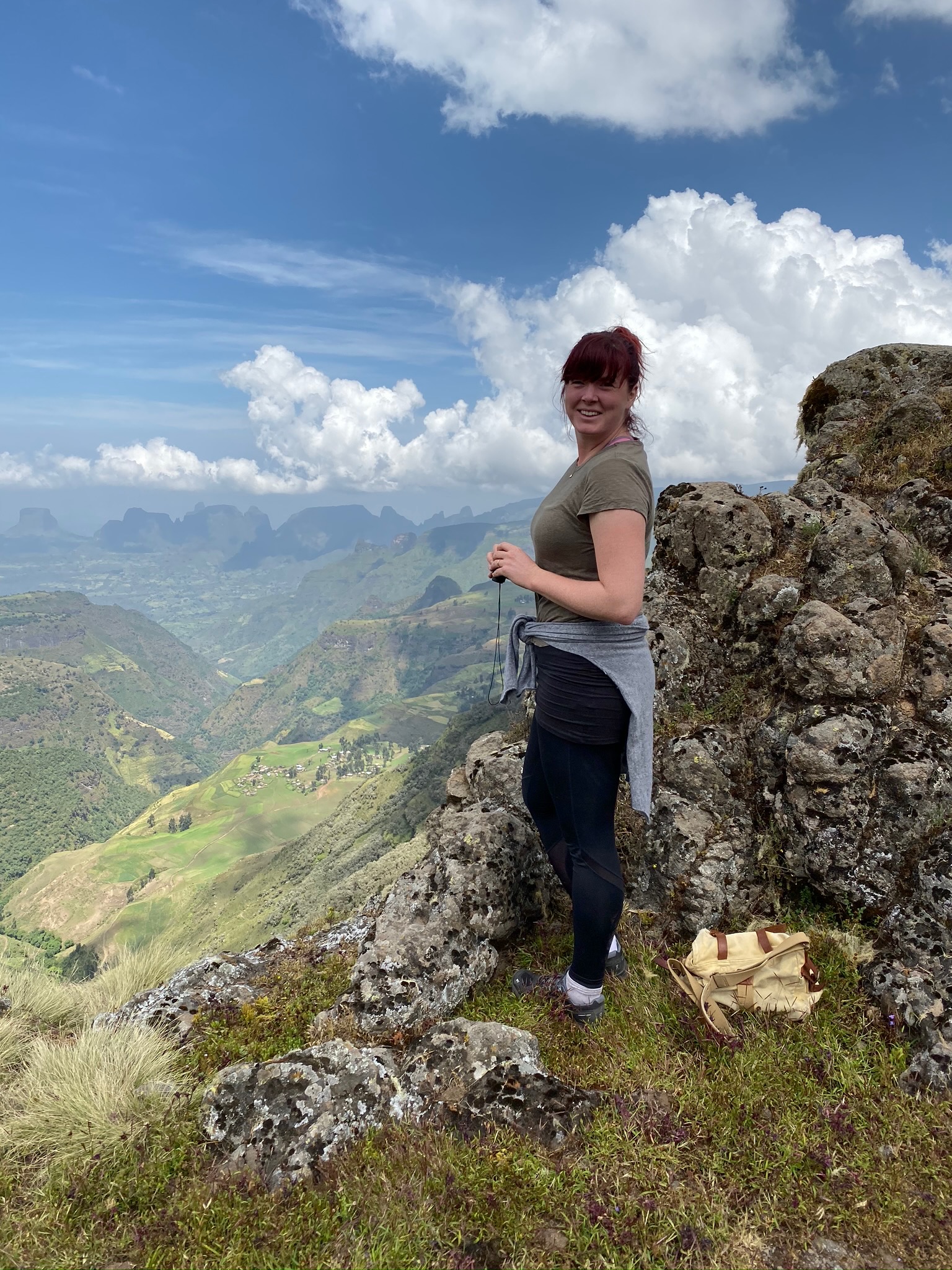
Our Trekking trips to Ethiopia Bale Mountains are best designed to help you explore the largest alpine habitat in Africa. Indeed, if you are wondering where to visit in Ethiopia especially if you are keen on trekking or nature lover, Bale Mountains will be a place to mull over. Ethiopia’s Bale Mountains are great trekking site and the largest area of Afro Alpine habitat in the whole of the African continent.
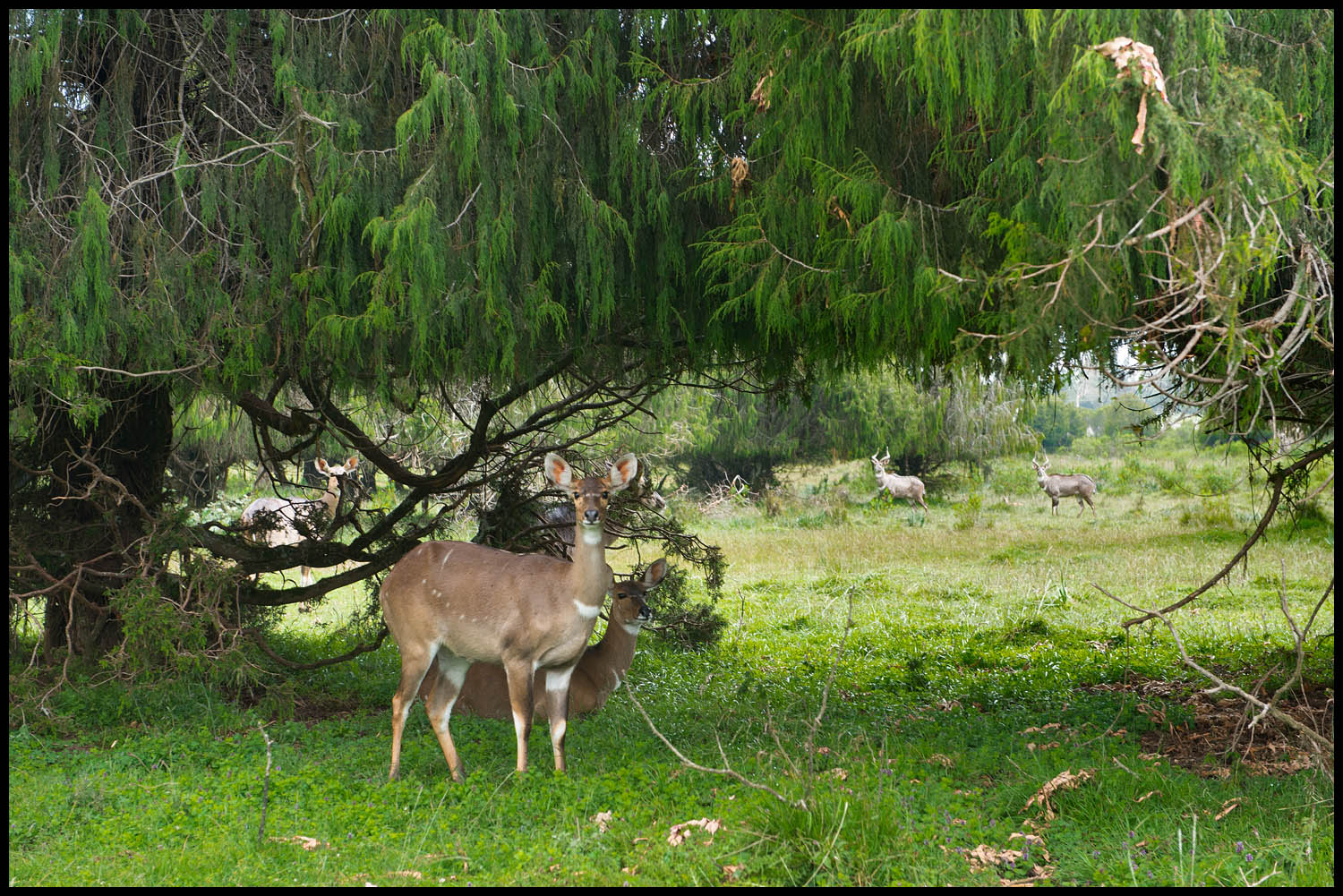
At Dinsho headquarters, you will have couple of kilometers nature trail that gives you a brief introduction to the plants and animals of the area. There is a good opportunity of seeing Mountain Nyala, is a large antelope in the spiral-horned antelope family.
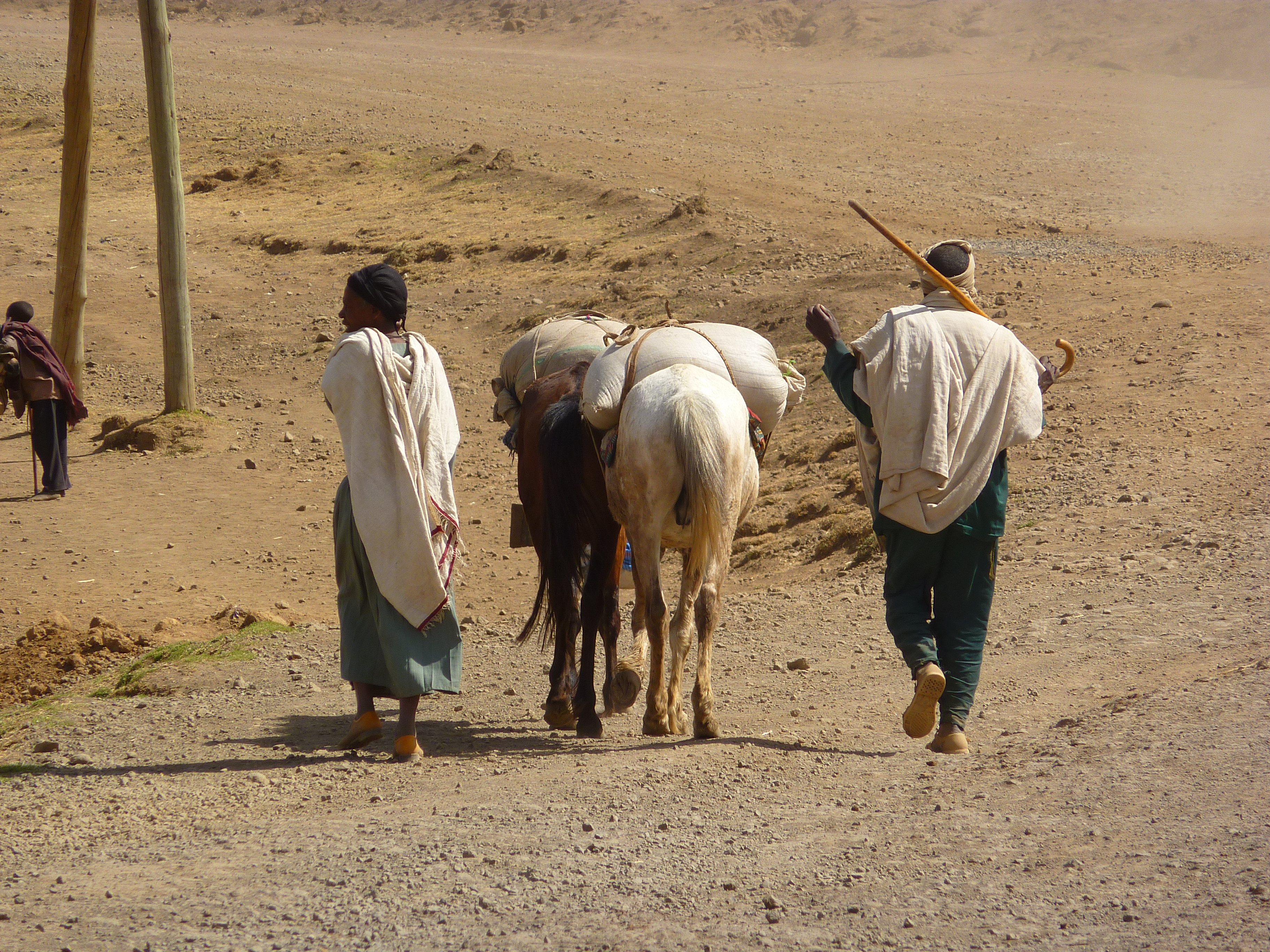
The park gives the visitor opportunities for unsurpassed mountain walking, horse trekking, scenic driving. It also gives the chance to view many of Ethiopia’s endemic mammals in particular the Mountain Nyala and Simien Fox and birds such as Abyssinian Wood Pecker, Thick – Billed Raven, Wattled Ibis, Blue Winged Goose, etc.

Bale Mountains The Largest Afro Alpine Habitat In Africa
This area derives its name from the little Gaysay river that flows into the web near Dinsho. It consists of Boditi peak at the southern end of the Lajo Spur, and the flat lands each side of the Gaysay river at the mountain’s base. The main road crosses part of the Gaysay area, just before reaching Dinsho.
The entrance gate lies beside (north of) the main road seven kilometres before the village, coming from Shashamenne. A small track from the gate leads you across the Gaysay river and then divides at the base of the mountain. The eastern arm affords good views of the plains west of the Web river and goes four kilometres to the northern boundary fence at the small Albabo stream.
Colobus monkey are often seen in the Hagenia forest before the first stream crossing. There is a small photographic hide that is ten minutes walk up the first stream through lovely Hagenia trees. The left fork of the track goes for three kilo-metres to the northern boundary fence around the west flank of Boditi. There are good views of the Gaysay valley and its associated marshes brimming with reedbuck. Fine views can be had to the north of the Gaysay valley and Lajo Spur.
The Gaysay area guarantees every visitor views of the endemic Mountain Nyala in considerable numbers. As many as 400 have been seen here in a single afternoon. In addition there are numerous Grey Duiker, Warthog and the Menelik’s race of Bushbuck with beautiful jet-black males.
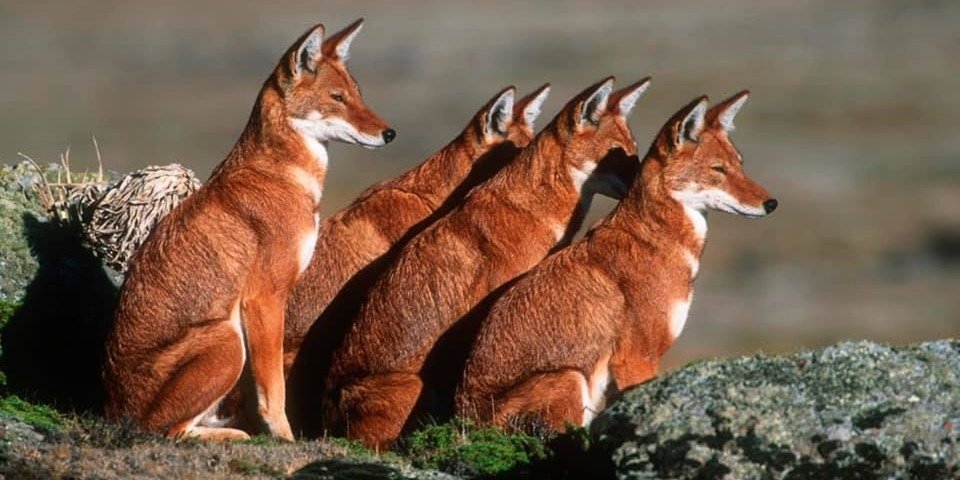
Endemic Wildlife At Bale – Red Fox
Colobus and Baboon are sometimes seen here in Bale Mountains. The beautiful Serval Cat is often surprised hunting in the long grass. On very rare occasions Leopard are sighted, and sometimes a pair of the endemic Semien Fox. Birds abound, especially in the forested parts, and are usually heard if not seen.
The spectacular road from Goba south to Dolo-Mena crosses the eastern part of the Bale Mountains National Park and the Sanetti Plateau. This – the highest all-weather road in Africa, crosses the 4,000 m contour, and some of the loveliest mountain scenery in Africa that can be viewed from the comfort of your vehicle.
The road climbs up from Goba through beautiful Juniper and Hagenia forest. The road is lined with the orange-blossomed Leonotis, and in the wet season the “Red Hot Poker” (Kniphofia) is blooming beneath the trees and attracting the brilliant irridescent Tacazze and Malachite Sunbirds.
This forest gives way to giant St John’s Wort (Hypericum revolutum) woods at 3,300 m altitude. This narrow zone is soon succeeded by heather (Erica) moorlands at 3,400 m and you are out of the forest and into the open in the mountains proper. Vistas open to the strange pinnacles of Chorchora peak on the left – one of the Park boundary markers, and across the sheer – sided Tegona river gorge to the right.
Another steep zigzag climb across slopes covered in heather bushes and Alchemilla johnstoni scrub, and you enter the Plateau proper, through the portals of the weird five-meter-tall flower columns of giant Lobelia rynchopetalum plants.
Here the plateau is studded with numerous shallow alpine lakes, with views to the steep-sided volcanic plug of Konteh Tullu in the south, and the long craggy ridges of Mt. Batu (4,203 m) in the west.
The road continues climbing gently, past Crane lakes at the base of Konteh. This is the centre of the best area for seeing Semien Fox, and on rare occasions small groups of Mountain Nyala. Here, you are at over 4,000 m above sea level, and in pure, clear cool mountain air with views in all directions on a clear day.
These views are heightened by the steep climb to the top of Konteh (4,132 m), or the longer (ca. one and a half hour) climb to the top of domed Tullu Deemtu (the “red mountain” in Oromo) to the west of the road soon after. This is the second highest mountain in Ethiopia at 4,377 m above sea level.
The road then skirts the base of Tullu Deemtu, and continues south to the edge of the Harenna escarpment, forty kilometres from Goba. Here, on a clear day, the view is open right out over the southern lowlands. The road descends the escarpment through a series of spectacular hairpin bends. The initial heather scrub gives way after a few kilometres to Hagenia, heather and St John’s Wort forest, and later merges into lush Podocarpus forest; enormous trees covered in epiphytes mosses, ferns and “Old Man’s Beard” lichens.

Explore Bale Mountains Scenic Beauty
This continues down the small escarpment of Rira, where looking back you see the tall rock towers of Gujurule, their tops often shrouded in cloud and mist. Round their base is glorious mixed forest with bamboo and many clear sparkling streams that are the source of the Shawe river. Later the road crosses the main Shawe river, passing through tall mature Podo forest with its towering trees, until it suddenly ends almost 100 kilometres from Goba.
The Park boundary is shortly before this as you cross the Shisha – a small tributary of the Yadot river. The forest gives way abruptly to dry, low-land wooded grasslands at about 1,600 m altitude, and about ten kilometres later the little village of Dolo-Mena is reached.
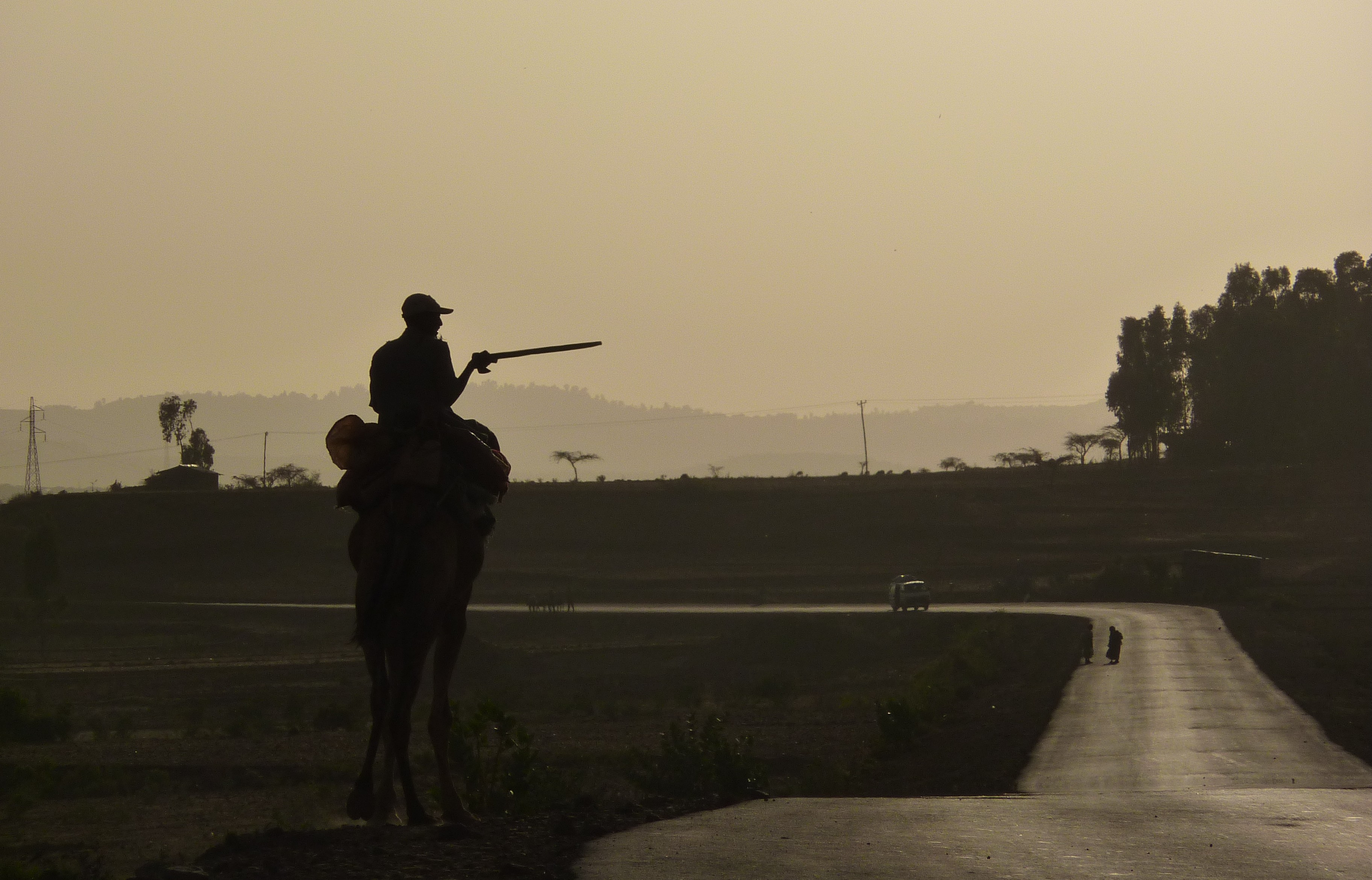
Here on a market day you will be treated to the surprising sight of camels, so soon after leaving the Alpine conditions of over 4,000 m altitude!
Dolo-Mena is 110 kilometres from Goba, but a reasonable undertaking for a day’s drive is from Goba to the southern edge of the plateau, with maybe a descent of the escarpment into the forest below, followed by the return to Goba.
A good campsite exists at Katcha, after Rira on the left of the road, along a track to a road quarry. This is a good base for walking in the bamboo forest, and, for the more energetic, exploring the Gujurule volcanic plugs.
Simbirro track A rough (four-wheel-drive only) eleven-kilometre track leads from the Park Head-quarters compound, south into the Park area. This track crosses the interesting natural bridge over the Danka river where hyrax can be seen. It then runs beneath cliffs through heather to the edge of the gorge of the Web River.
It ends in a broad flat valley, from where it is an easy forty minute walk to the beautiful Finch’ Abera water fall, where the Web and Wolla rivers join. If you are lucky you may see Semien Fox in the area at the end of the track.
Arrangements can be made to meet your horses at this point for more ambitious treks into the main park area above from anywhere along the roads and tracks mentioned Walks can he accomplished in the Dinsho area, or main park authorities in Dinsho.
In addition shorter and accompanied by a guide can be arrange through into the main peak area with pack and riding horses a walking area. Horse treks of Several days duration Walking Bale Mountains Mountain Park is essentially fence around the compound. From the top of the hi Quarters on foot.in the Sanctuary afforded by the added opportunity of seeing Mountain Nyala at close area, and the location of the main Park. There is the brief introduction to the plants and animals of the trail has been designed.
Enjoy A Life Time Trekking in Bale Mountains of Dinsho and Sanatte Plateau
At Dinsho Head Qauarters,a one-kilometre Nature trail has been designed up Dinsho hill. – one of the “everlasting flowers”. Mountain Nyala, along the connecting spur to the Adelay ridge leads traverse of the uplands to the north.
The Sanetti Plateau is crowned by several peaks that add a good walk to the drive over it. Konteh Tullu – the striking volcanic plug east of the road on the plateau, may look formidable, but twenty minutes of steep scrambling from its base gives you magnificent views from the top (4,132 m) in all directions.
The steep climb to the summit is through beautiful Klipspringer, at the top. A steep descent off the Menelik’s Bushbuck and Warthog are the strange grey tussocks of Helichrysum citrispinumyou through beautiful heather and grass glades with mature Hagenia and juniper forest, and into heather Dinsho, up the Web valley to Gasuray peak (3,325 m).
Very enjoyable day-long walk can be had from views and the chances of seeing wildlife at close. Walking on Gaysay hill is rewarding in terms of the north east corner of Adelay brings you back down to the main road and Dinsho village.

What Our Guests Said About Ethiopian Trekking to Bale Mountains
Hannah Smith
“Our trip was FULL of memorable and exciting moments. A few that spring to mind include hiking the trails high in the mountains above Lalibela, our first coffee ceremony (and later, juniper gin!) around a fire with a local family and their donkeys, the surprise of a hippopotamus in Lake Tana and the peace of the exquisite church on the shore, the gelada monkeys perching and grooming on cliff edges in the Simien Mountains and an invitation to coffee at the home of our lovely driver Kunjo. A magical week full of surprise and delight.”
Ruth Scally
“We were blown away by Ethiopia. The scenery was stunning with the Blue Nile waterfall and awesome volcanic mountains. The rock churches were impressive and so different at the different areas. They were definitely worth the walk/scramble up to see them in Tigray. The tour was extremely well organised by Eskinder Hailu, and all of the local guides and drivers were knowledgeable and friendly. Ethiopia was certainly one of the safest countries that we have been to.”
More Interesting Facts About Ethiopia Bale Mountains
Tullu Deemtu is the second highest mountain in Ethiopia at 4,377 m, and the highest point in the Bale Mountains. Starting from the main road at its base it takes one and a half to two hours to climb the slopes and reach the summit-a rounded ridge hidden from the aspect of your starting point. Hares and rodents abound up here, despite the sparse vegetation cover. Mountain Nyala are often seen below the summit to the south where there is a small water seepage point and grove of Giant Lobelia plants. Wide views can be had all around, but especially to the main plateau with its lakes and lava flows to the west, and to Mt. Batu a short distance north.
Short riding trips can be arranged in the Dinsho area, but it is far more worthwhile to set aside at least four full days to enjoy a horse trip to the full. Arrangements are best made beforehand by letter or phone, but horses can be organized for a morning departure if requested the afternoon before. Various routes can be followed, and it is best to take the advice of your local guide from Dinsho. Examples of trips are outlined here.
Travelling up the Web, then Wolla valleys from Dinsho, you pass the lovely waterfall of Finch’abera, and finally reach the beautiful campsite of Moraro (3,750 m). Next day travel up the Wasama valley beneath the peaks of the same name; see and taste the strange mineral springs (“hora” in Oromo) before making the steep ascent out of the head of the valley onto the Sanetti Plateau. Travel across to camp beneath Mt. Batu’s crags, at the head of the Shiya valley.
Climb Batu, then ride on across the arms of the Batu horshoe, to camp beside lovely Garba Guracha lake set beneath towering cliffs in the head of the Tegona valley. On the last day ride across the plateau and its many lakes to be met by your vehicle at the Goba – Dolo-Mena road, while the horses return to Dinsho at their own pace.
Alternatively, cross from the Wasama to the Worgona valley, past the magnificent sheer cliff of Arch’aah – looking as though cut with a knife; or ride down the side of the Shiya gorge from the base of Batu into the Worgona valley. From here a steep ascent across one of the Kara Worgona Passes and down into the lovely Danka valley, past Batu Tiko’s (“Little Batu”) craggy plug; camp overnight beneath the strange ‘balancing’ rocks, and return to Dinsho in an easy stage the next day.
Slightly longer trips can be made ascending the Web valley all the way to its source near Mora Bowa mountain, then turning east through one of the passageways between the strange lava flows Keyrensa (“leopard” in Oromo) or Rafu with its rock pillars on the edge of the Kubachenna gorge. These take you onto the Sanetti plateau further south, from where you can return to Dinsho via Wasama, Moraro and Wolla or alternatively ride on across the plateau and its lakes to Tullu Deemtu or Batu and the road beyond to be collected by your vehicle.
Wildlife densities are not high on any of these trips, but what you do see will be surprising and un-usual. Semien Fox, Hyrax and Klipspringer are usual-ly seen in reasonable numbers, and Mountain Nyala usually once each trip at these high altitudes. Birds are frequent, especially waterbirds on the lakes and streams. The scenery is always there, together with peace and solitude, a gentle pace, a sturdy, sure-footed mount, and the time to stop, think, look-or simply “switch-off” for a while! cool, pure mountain air, simple camp life – and an experience of a life-time. Give yourself time, Bale Mountains will give you the rest.
Ethiopia Sof Omar Caves
The fantastic limestone caves of Sof Omar make a day’s outing from Dinsho, Robe or Goba. The road leaves Robe town, crossing the farming areas to the east, before descending into the low-lands.Here the vegetation is very different being dry lowland with wooded grasslands. The caves lie at 1,300 m above sea level. This is in marked contrast to what you will experience in the Bale Mountains at up to 4,000 m. Very different animals occur along the way as well, most noticeably the Greater and Lesser Kudu – both relatives of the Mountain Nyala, and the tiny Dikdik antelope.
The caves themselves carry the whole flow of the Web River, that rises in the Bale Mountains, under-ground through wonderfully carved caverns for a distance of one and a half kilometres. There are over fifteen kilometres of associated I passages, which re-quire skill, time and special equipment for a full exploration.
However, a friendly local guide will show you enough to take your breath away and make the trip worthwhile, for an hour or for as long as you care to spend. A cool dip in the clear river afterwards refreshes you for the return drive. Full details of the caves are provided in the excel-lent booklet, “The Caves of Sof Omar” obtainable from the Ethiopian Tourism Commission.
Fishing nine rivers and streams between Adaba and Goba were stocked with trout in the early 1970’s. These have thrived and are now available for sport fishing by visitors. Information, guides and permits can be obtained from the Ministry of Agriculture offices in Adaba, Dinsho and Goba. Brown Trout can be fished on a short stretch of the Web River near Dinsho, while all the other rivers are stocked with Rainbow. Anglers have to provide all their own equipment. Fishing conditions are varied cascading waterfalls, deep still pools, or the tiny narrow and clear Danka stream. Good exercise, beautiful scenery, peaceful surroundings-and hopefully supper, are all combined in the one activity.
We Like To Hear From You


More Ethiopian Treks For You
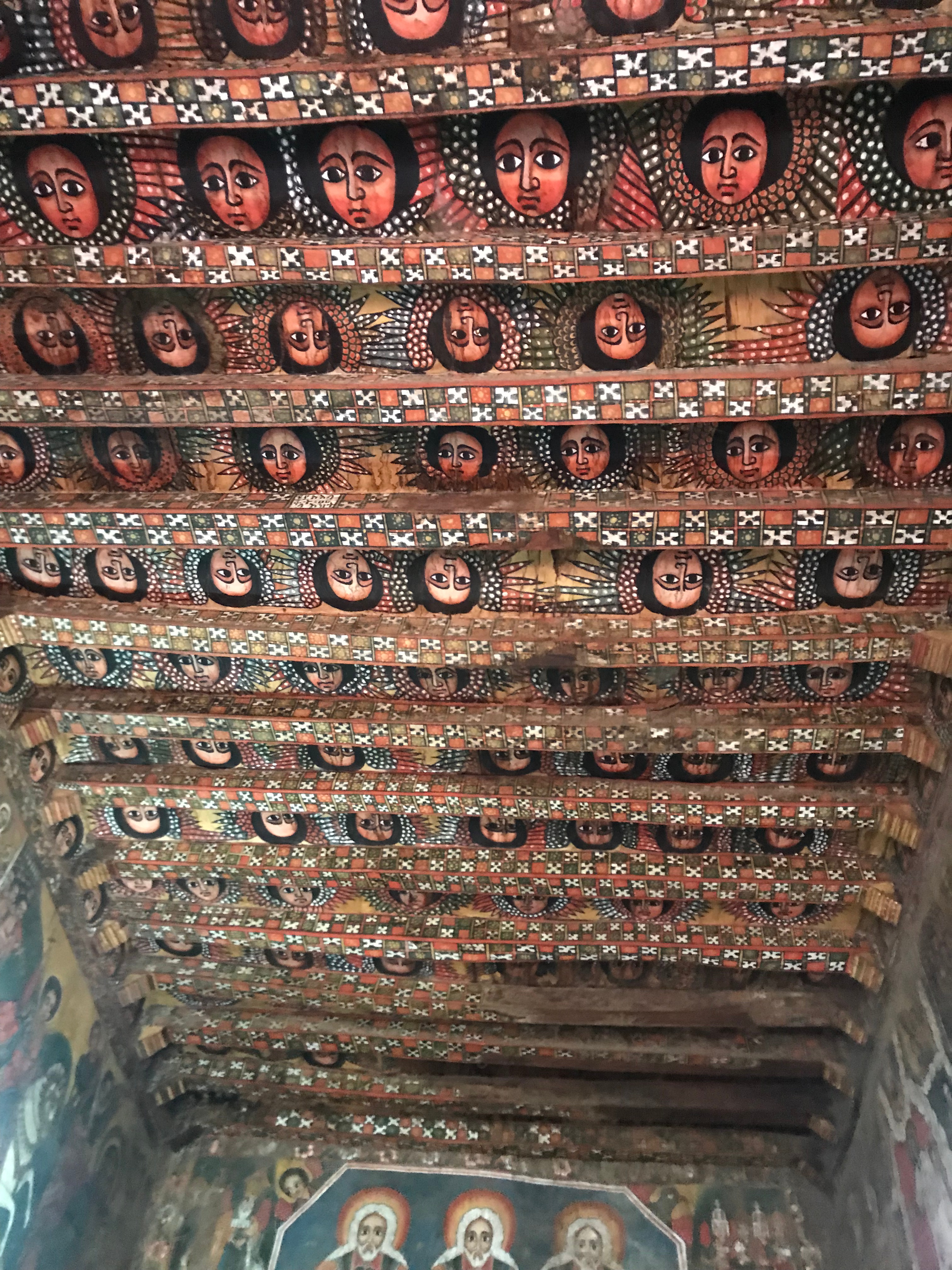
We offer a wide range of tours in Ethiopia all the way from North to South and East to West. If you are keen on mountains trekking, ancient history, or tribal culture, we are here for you. Click on one of the images below as we love you to explore more on what Ethiopia offers.

 Ethiopian Treks